 Image 1 of 2
 Image 2 of 2
Timberlove® (CAS 6790-58-5) – Premium Biobased Ambroxide by Chematek - Technical Specifications
Timberlove® is Chematek's trademarked, high-purity ambroxide produced through an optimized bio-based chemical synthesis. Certified 100% biogenic carbon by TÜV SÜD and ASTM D6866, this premium fixative delivers exceptional woody-ambery-musky notes with outstanding tenacity and diffusion. EU REACH registered and FEMA GRAS approved.
🏭 Manufacturer — Chematek S.p.A. (Italy)
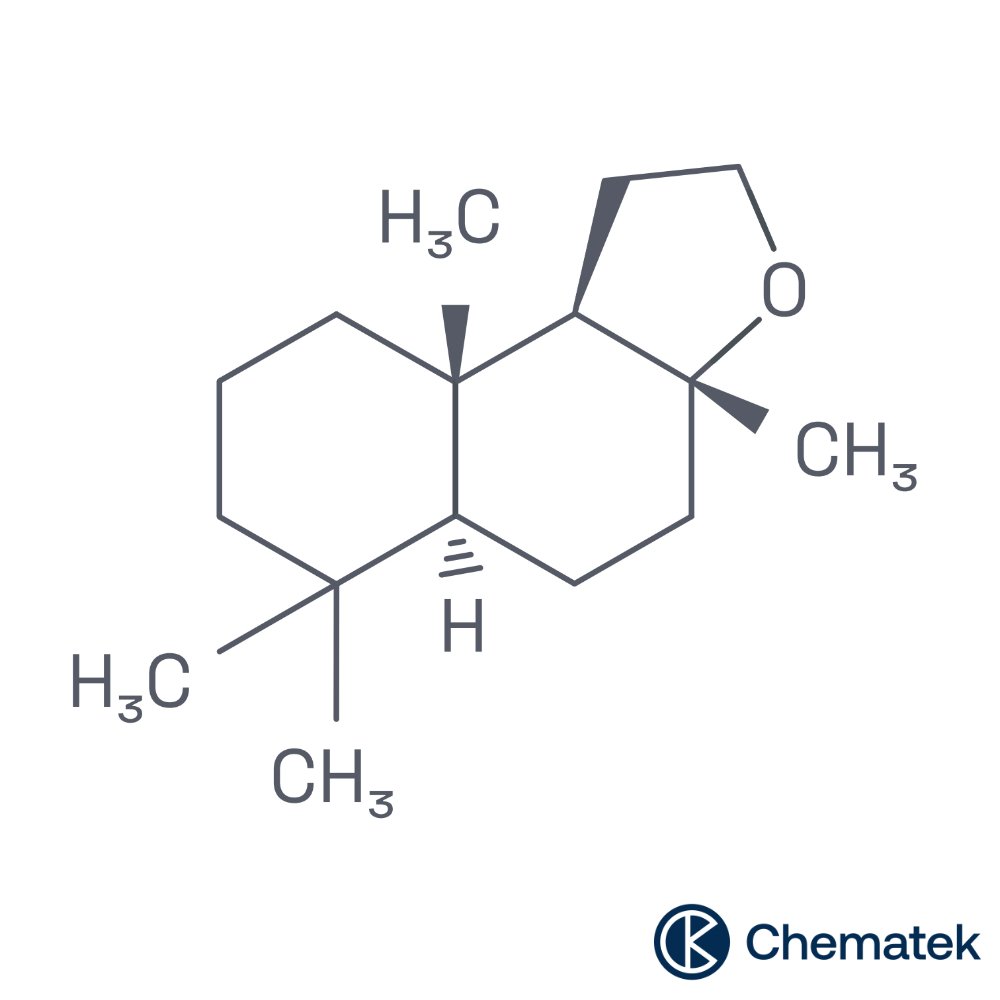
🔎 Chemical Name — (3aR,5aS,9aS,9bR)-Dodecahydro-3a,6,6,9atetramethylnaphtho[2,1-b]furan
🧪 Synonyms — Ambroxide, (-)-Ambroxide, Ambroxan, Ambrofix, Ambroxid
📂 CAS Number — 6790-58-5
📘 FEMA Number — 3471
🔢 EC Number — 229-861-2
⚖️ Molecular Weight — 236.40 g/mol
🔬 Molecular Formula — C₁₆H₂₈O
📝 Odor Type — Ambergris, woody, musky
📈 Odor Strength — Extremely powerful; detection threshold approximately 0.3 ppb
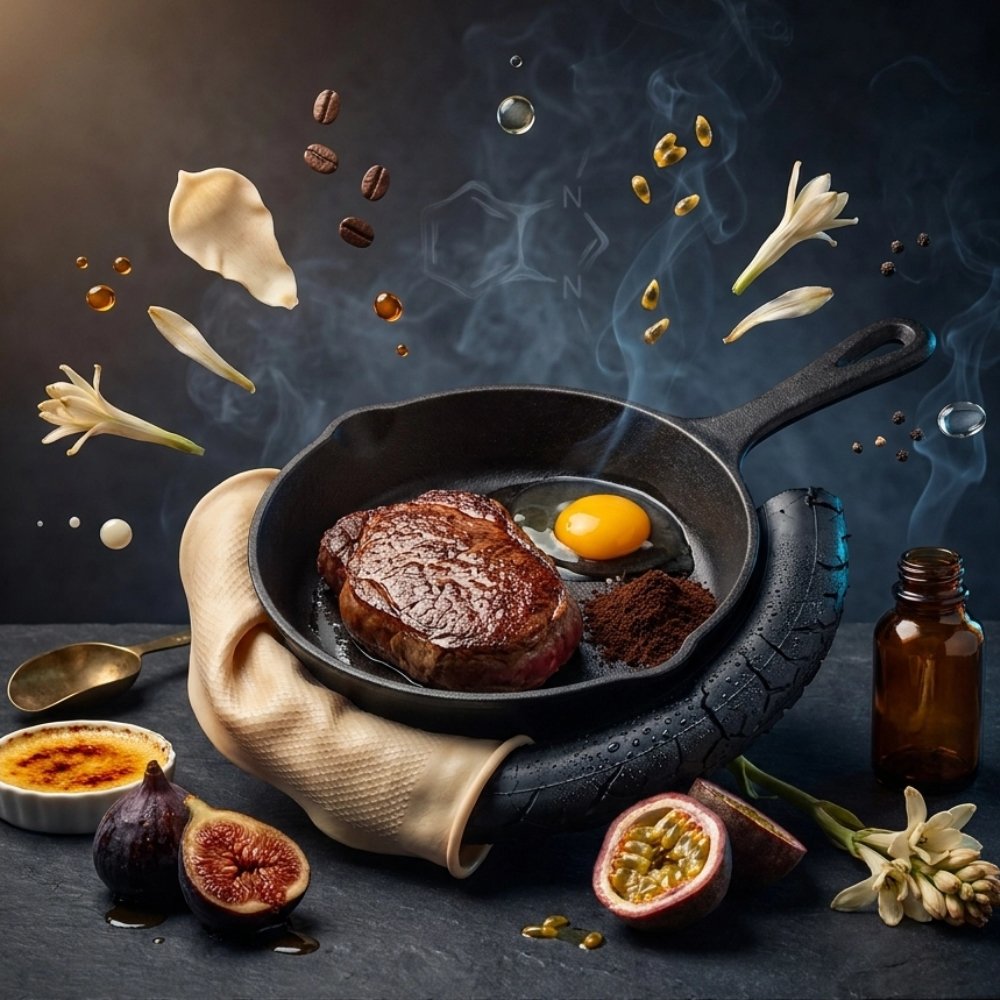
👃🏼 Odor Profile — Elegant, warm ambery-woody character with musky undertones, mineral nuances, and subtle animalic facets reminiscent of natural ambergris; clean, sensual dry-down with exceptional radiance
⚗️ Uses — Fine fragrance fixative, amber accords, woody-musky compositions, functional perfumery (detergents, fabric care, personal care), flavor applications (trace amounts)
🧴 Appearance — White crystalline solid
Additional Physical Properties
🌡️ Melting Point — 74–76°C
🔥 Boiling Point — 272–274°C
💧 Density — 0.939 g/mL at 25°C
🔍 Refractive Index — n²⁰/D 1.480–1.481
🔄 Specific Rotation — [α]²⁰/D −25.8 ± 1.5° (c=1, CHCl₃) (Chematek, 2025)
✅ Purity — ≥98.0% (GC) (Chematek, 2025)
🧬 Biogenic Carbon Content — 100% (TÜV SÜD & ASTM D6866 certified)
What is Timberlove®?
Timberlove® is Chematek's premium-grade ambroxide, a labdane-type diterpenoid that serves as the principal odorant responsible for the characteristic scent of natural ambergris. Structurally, it belongs to the perhydronaphthofuran class, featuring a fused decalin system with a tetrahydrofuran ring that confers exceptional stability and fixative properties.
What distinguishes Timberlove® from other commercial ambroxides is Chematek's proprietary synthesis process. Manufactured in-house by an experienced team of chemists, Timberlove® benefits from an optimized reduction step that delivers superior olfactory performance with minimal "olfactory noise"—the unwanted byproducts that can occur with fermentation-based methods (Chematek, 2025).
The product is synthesized starting from natural, renewable feedstocks using a fully controlled integrated bio-based and chemical process. This hybrid approach combines sustainability with technical consistency, offering what Chematek describes as "a reliable improvement to fermentation-based methods" (Chematek, 2025).
Historical Background
The story of ambroxide begins with natural ambergris, a rare secretion from sperm whales (Physeter macrocephalus) prized in perfumery since antiquity for its warm, musky, and ethereal qualities. The compound responsible for this distinctive scent—ambroxide—was identified through the degradation and oxidation of ambrein, the primary constituent of ambergris.
The scientific journey toward synthetic ambroxide began in 1946 when Nobel laureate Leopold Ruzicka and Fernand Lardon first isolated ambrein at ETH Zürich. Building on this work, Swiss chemist Max Stoll and Martin Hinder at Firmenich achieved the first semi-synthesis of (-)-ambroxide in 1950, using sclareol extracted from clary sage (Salvia sclarea) as the starting material (Stoll & Hinder, 1950).
This breakthrough represented a paradigm shift in perfumery, making ambergris-type notes accessible, ethical, and sustainable. The synthesis route involved oxidative degradation of sclareol to sclareolide (a lactone), followed by reduction to ambradiol and acid-catalyzed cyclization to form the naphtho[2,1-b]furan ring system (Sell, 2014).
In 1977, IFF researchers confirmed through chromatographic studies that ambroxide is indeed the key odorant responsible for the characteristic smell of aged ambergris, validating decades of perfumery intuition.
Subsequent milestones include:
1988 — Firmenich introduced Ambrox® DL, a fully synthetic racemic version
1993 — Cetalox® launched, offering a more transparent, woody variation
2009–2021 — Biotechnological production methods emerged (Givaudan's Ambrofix®, Firmenich's Ambrox® Super)
2020s — Chematek developed Timberlove® with optimized bio-based synthesis
Today, global production of ambroxide-type materials exceeds 100 metric tons annually, making it one of the most important synthetic musks in modern perfumery (Chem & Bio Engineering, 2024).
Olfactory Profile
Scent Family
Ambery-woody-musky with animalic and mineral facets
Main Descriptors
Timberlove® exhibits the classic ambroxide character: a powerful, elegant ambery odor with pronounced woody tonalities and a distinctive musky sweetness. The profile includes mineral and saline nuances that evoke natural ambergris, alongside subtle animalic undertones that add depth and sensuality. The scent is remarkably clean and transparent, lacking the harsh edges sometimes associated with synthetic musks.
Intensity
Extremely powerful—ambroxide has one of the lowest odor detection thresholds in perfumery (approximately 0.3 ppb). Timberlove® allows perfumers to achieve significant olfactory impact at modest dosage levels, typically 0.1–1% in fine fragrance concentrates, though modern "ambrox bomb" compositions may employ concentrations of 10% or higher.
Tenacity
Exceptional—ambroxide is renowned for its extraordinary persistence. On a smelling strip, the scent can last up to one month; substantivity exceeds 400 hours at 10% concentration in dipropylene glycol (Chematek, 2025). This remarkable longevity stems from the compound's low volatility and stable molecular architecture.
Volatility
Base note character. Despite its classification as a base note, Timberlove® exhibits unique diffusive properties that bring an ambery effect from top notes through to the dry-down. This "radiant" quality—the ability to project and bloom throughout a fragrance's evolution—is one of the material's most valued characteristics.
Applications in Fine Fragrance
Timberlove® adapts to diverse creative visions, functioning as both a signature note and a supporting fixative:
Woody & Amber Bases (10–30%) — Forms the backbone of modern amber constructions; at 20%+ becomes the dominant character, delivering tenacious warmth
Skin Scents & Musks (8–20%) — Pairs naturally with Iso E Super, Cashmeran, and synthetic musks to create intimate, second-skin effects
Marine & Aquatic Accords (5–15%) — Amplifies mineral freshness without overwhelming citrus or ozonic notes
Fougère & Fresh Compositions (0.5–3%) — Trace amounts add subtle depth and longevity without disrupting top note clarity
Oriental & Incense Bases (5–15%) — Provides the luminous foundation for labdanum, benzoin, and resins
Notable commercial fragrances featuring ambroxide prominently include Dior Sauvage (estimated ~10%), Maison Francis Kurkdjian Baccarat Rouge 540 (estimated ~18% via GCMS analysis), Escentric Molecules Molecule 02 (100% Ambroxan), and Juliette Has a Gun Not a Perfume.
Performance in Formula
Timberlove® demonstrates several key formulation advantages:
Fixative Power — Anchors volatile top and heart notes, extending overall fragrance longevity
Radiance Effect — Imparts a "glow" to compositions, enhancing projection without heaviness
Stability — Resistant to oxidation and degradation; shelf-stable with proper storage
Compatibility — Blends seamlessly with most fragrance families; particular synergy with cedarwood derivatives, ambrette seed, and synthetic woods
Solubility — Good solubility in alcohol and common fragrance solvents; crystalline form enables precise dosing
Chematek notes that their proprietary synthesis process provides "batch-to-batch stability and reproducibility" with "high purity" and "excellent crystalline structure" (Chematek, 2025).
Formulation Note: Avoid over-pairing Timberlove® with fermentation-derived ambroxides, as the olfactive profiles may clash rather than complement.
Industrial & Technical Uses
Beyond fine fragrance, Timberlove® finds application in:
Functional Perfumery — Fabric softeners, laundry detergents, household cleaners where long-lasting scent is essential
Personal Care — Shampoos, conditioners, body lotions, deodorants requiring lasting scent retention
Flavor Industry — FEMA GRAS approved (No. 3471) for trace use (<0.01 ppm) as a flavoring agent, though rarely employed in this capacity
Cosmetics — Non-irritating and non-allergenic, suitable for skin, hair, and fabric applications
Regulatory & Safety Overview
IFRA Status
✅ No restrictions under current IFRA Standards (51st Amendment, 2023). Ambroxide is not subject to prohibition, restriction, or specification under IFRA guidelines, allowing unrestricted use across all product categories (IFRA, 2023).
EU Cosmetics Regulation
✅ Permitted with no specific restrictions. Not listed among the 26 declarable allergens under Regulation (EC) 1223/2009.
EU REACH
✅ Registered — Timberlove® is EU REACH registered, ensuring compliance with European chemical safety requirements (Chematek, 2025).
FEMA Status
✅ GRAS — FEMA No. 3471; approved for flavor use, though practical application is limited.
GHS Classification
Not classified as hazardous under the Globally Harmonized System (GHS).
Toxicology
Sensitization — Non-sensitizing in standard assays
Phototoxicity — Non-phototoxic
General — Low toxicity profile; safe for skin contact applications at typical use levels (RIFM, 2020)
Environmental Considerations
Biodegradability — Readily biodegradable under OECD 301F guidelines (32–93% degradation within 28 days)
Bioaccumulation — Low bioaccumulation potential (BCF 864 L/kg) due to rapid metabolic degradation
Not classified as PBT (Persistent, Bioaccumulative, Toxic) or vPvB (very Persistent, very Bioaccumulative)
Sustainability Credentials
Timberlove® is certified by both TÜV SÜD and ASTM D6866, confirming 100% biogenic carbon content. This certification independently verifies that Timberlove® is made entirely from renewable, plant-based carbon sources—a significant milestone in sustainable fragrance chemistry (Chematek, 2025).
Related Ingredients on Scentspiracy
Ambroxide Family:
Complementary Materials:
Iso E Super — Woody-amber synergy
Cashmeran — Musky pairing
Cedramber — Woody enhancement
Related Reading:
References
Chematek. (2025). Timberlove® technical data sheet. https://www.chematek.com/timberlove/
Chem-Impex. (n.d.). (-)-Ambroxide product information. https://www.chemimpex.com/products/33784
Flavor and Extract Manufacturers Association. (n.d.). FEMA GRAS flavoring substances. https://www.femaflavor.org/
International Fragrance Association. (2023). IFRA Standards—51st Amendment. https://ifrafragrance.org/standards-library
National Center for Biotechnology Information. (n.d.). (-)-Ambroxide (PubChem CID 10857465). PubChem. https://pubchem.ncbi.nlm.nih.gov/compound/Ambroxan
Research Institute for Fragrance Materials. (2020). Safety assessment for ambroxide. RIFM Fragrance Material Safety Assessment Center.
Sell, C. S. (2014). The chemistry of fragrances (2nd ed.). Royal Society of Chemistry.
Sigma-Aldrich. (n.d.). (-)-Ambroxide, ≥99% (Product W347108). https://www.sigmaaldrich.com/US/en/product/aldrich/w347108
Stoll, M., & Hinder, M. (1950). Odeur et constitution—III. Sur les produits de degradation de l'ambréine. Helvetica Chimica Acta, 33(5), 1251–1260.