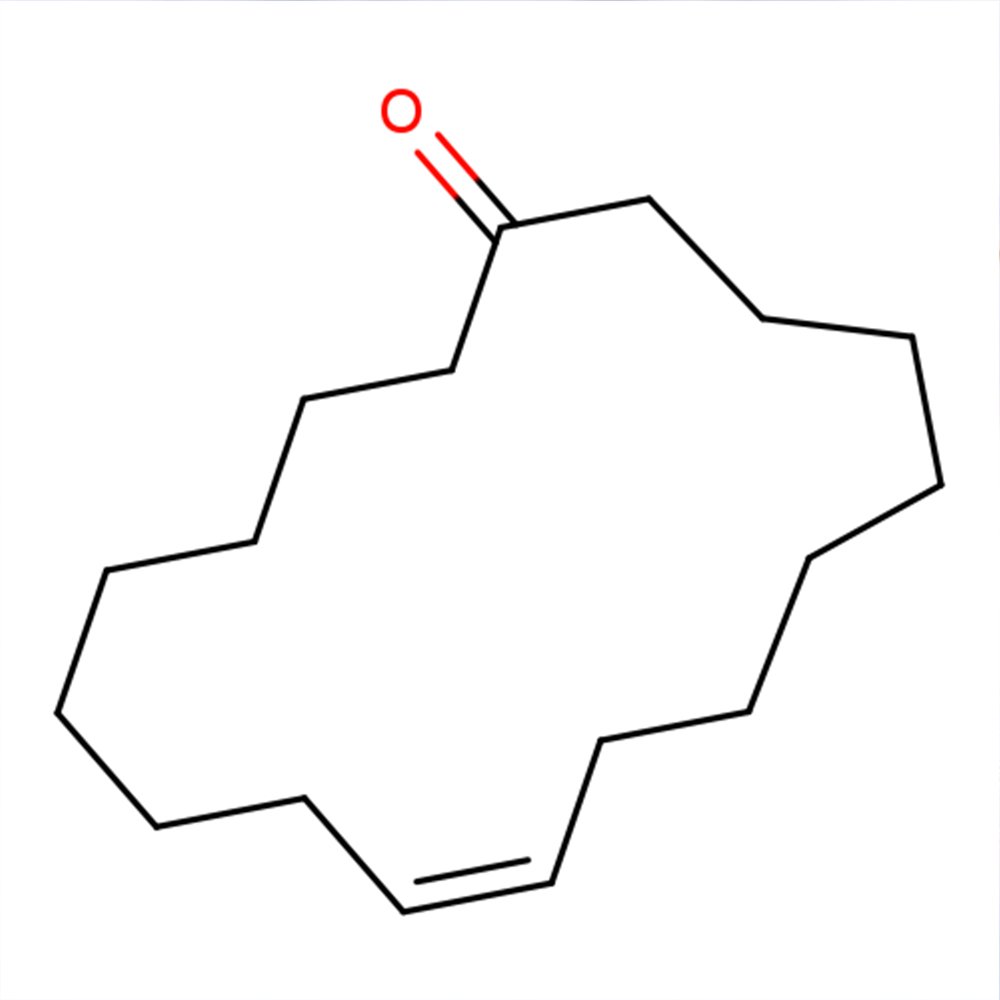
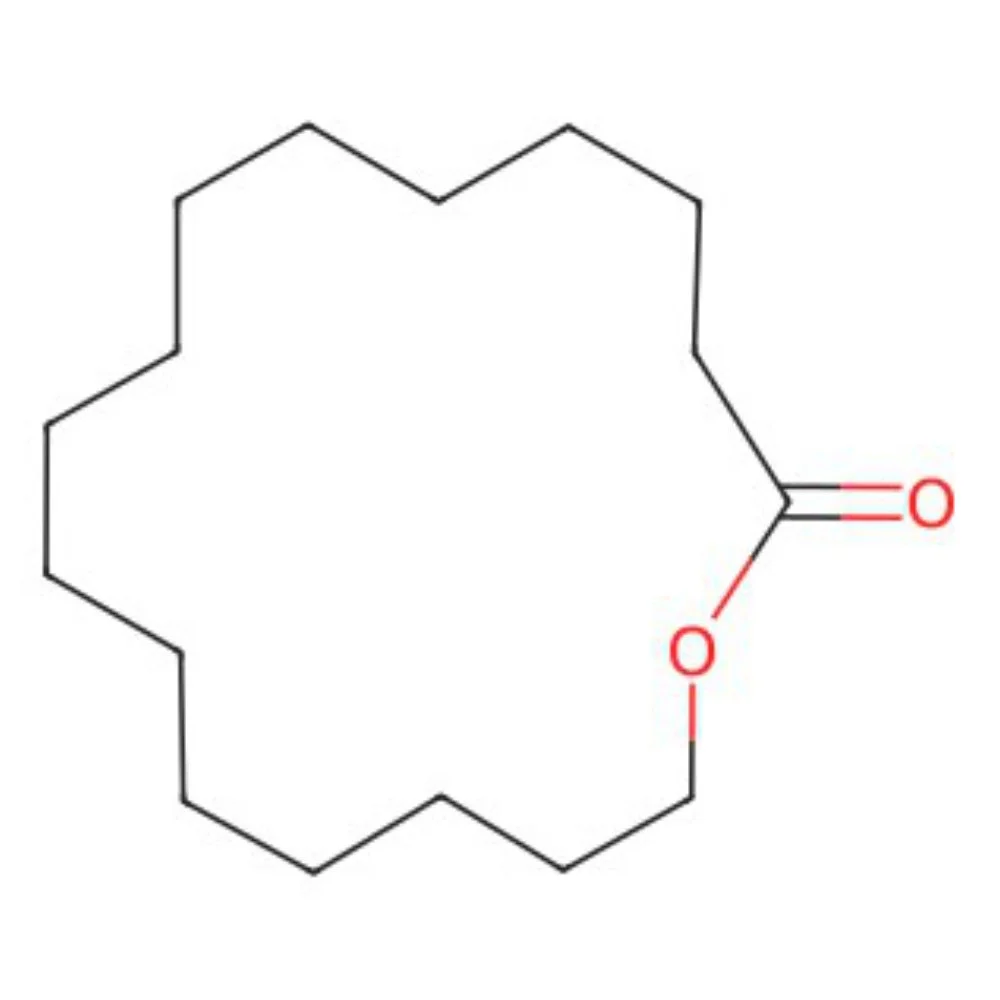
 Image 1 of 3
 Image 2 of 3
 Image 3 of 3
Hexadecanolide
Hexadecanolide (CAS 109-29-5) – Technical Ingredient Overview
🏭 Manufacturer —
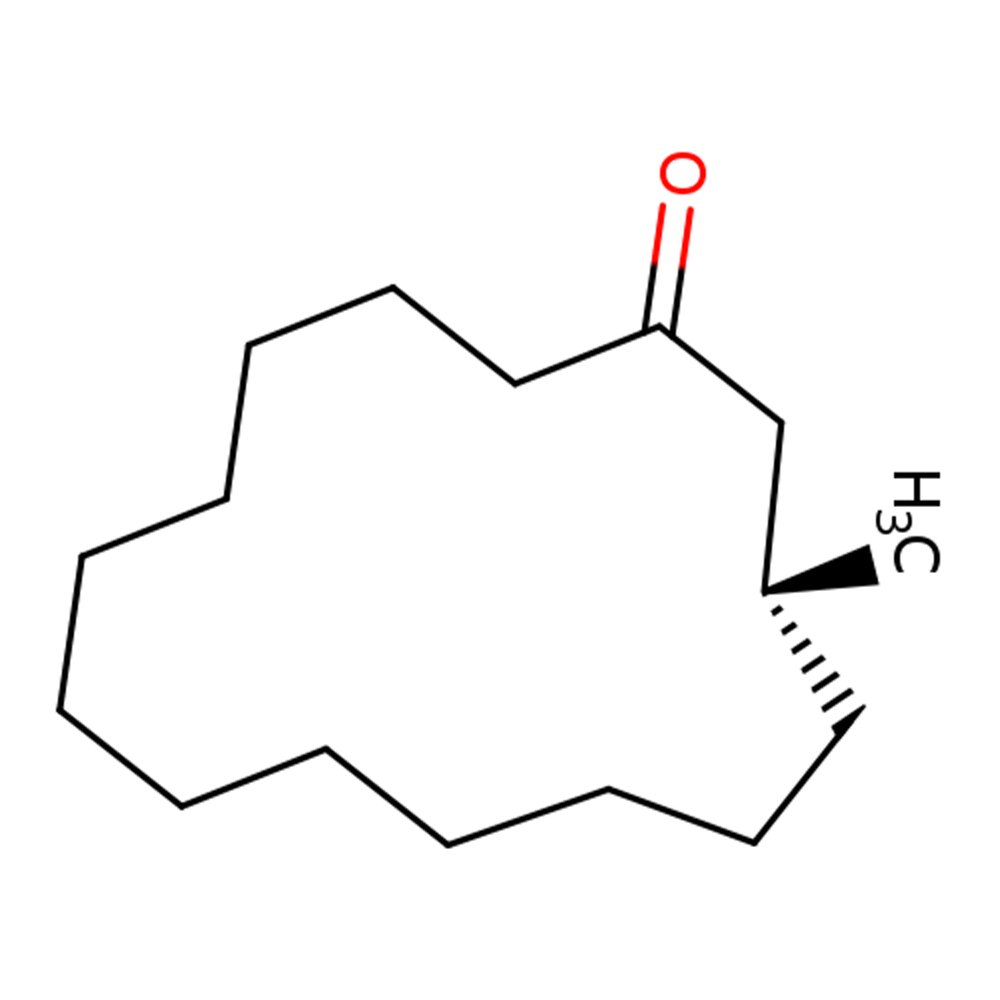
🔎 Chemical Name — Oxacycloheptadecan-2-one
🧪 Synonyms — Hexadecanolactone; cyclohexadecanolide; dihydroambrettolide; Silvanone Supra.
📂 CAS Number — 109-29-5
📘 FEMA Number — Not listed by FEMA, per the supplier documentation on file.
🔢 EC Number — 203-662-0
⚖️ Molecular Weight — 254.41 g/mol
🔬 Molecular Formula — C₁₆H₃₀O₂
📝 Odor Type — Musky, sweet; macrocyclic lactone musk.
📈 Odor Strength — Low
👃🏼 Odor Profile — Clean, silky musk with soft animalic, slightly milky nuances and a warm base impression, as described by the supplier.
⚗️ Uses — naturalistic musk accords, soft animalic bases, and sensual oriental compositions; use levels should be established by trials.
🧴 Appearance — Oily to opaque solid; colourless to very pale yellow.
Additional Physical Properties
🌡️ Melting Point — 33–34 °C.
💧 Density — 0.920–0.950 at 20/20 °C.
💧 Solubility — The technical documentation reports no solubility in water and no solubility in alcohol; the alcohol type and test conditions are not specified.
✅ Purity — 96.0–100.0% range reported in the SDS on file.
What is Hexadecanolide?
Hexadecanolide (also called hexadecanolactone) is a 17-membered cyclic ester: a single-compound macrocyclic lactone that PubChem classifies as a macrolide (NCBI, 2026). The grade on this sheet is synthetic. The same lactone has been reported as a volatile constituent of milk and milk products (Api et al., 2022).
Historical Background
In 1927 Kerschbaum obtained ambrettolide from ambrette seeds (Hibiscus abelmoschus). Later reviews identify hexadecanolide as its saturated dihydro analogue: it also has a musk-like odour, though to a lesser extent (Krishnaswamy & Sundaresan, 2013).
In 1962 Nikishin, Somov and Petrov published a laboratory synthesis from cyclopentanone and undecenol acetate, via 16-hydroxyhexadecanoic acid and thermal lactonization of the polyester in glycerol. They treated C₁₄–C₁₇ macrocyclic lactones as already valued in perfumery for their musk odour (Nikishin et al., 1962).
A European patent filed in 1998 listed hexadecanolide among macrocyclic musks long known in perfumery, with use then largely confined to fine fragrance — compositions for skin or cosmetics (Van der Weerdt & Payne, 2001).
Olfactory Profile
Scent Family: Macrocyclic musk / lactone; clean, musky-sweet.
Main Descriptors: Clean, silky, softly animalic, slightly milky, and warm in the base (supplier description).
Tenacity: High substantivity reported; the SDS value LogPow 7.3 indicates high lipophilicity.
Volatility: Positioned as a warm base-accord material; the SDS reports an estimated vapor pressure of 0.000026 mmHg at 25 °C, consistent with a low-volatility base note.
Applications in Fine Fragrance
The supplier documentation describes hexadecanolide as a structuring material for musk compositions, with two main creative contexts.
Naturalistic macrocyclic musk accords — Supports a clean, silky musk body and a warm base impression.
Soft animalic or sensual oriental bases — Creative contexts for its soft animalic and slightly milky facets.
Performance in Formula
Fixative Power — The technical documentation describes a fixative effect in musk compositions.
Stability — The SDS on file reports the material as stable under normal conditions, with an 18-month shelf life when stored at max 25 °C in the tightly sealed original container, away from light, heat, and air; flash point above 100 °C (closed cup).
Industrial & Technical Uses
Functional Perfumery — The technical documentation identifies fragrance use in musk accords and bases.
Personal Care — Personal-care products are listed as an end-use area in the technical documentation.
Flavor Industry — Flavours are listed as an end-use area in the technical documentation.
Cosmetics — Listed as an application in the technical documentation; in the EU, finished-product labeling follows the fragrance-allergen rules below (European Commission, 2023).
Regulatory & Safety Overview
IFRA Status: The certificate on file, dated 14 November 2023, states conformity to the 51st Amendment, lists no restricted components, and gives a 100% maximum for all product categories (classes 1–12).
EU Cosmetics Regulation: Hexadecanolactone (CAS 109-29-5; EC 203-662-0) appears in Annex III, entry 335, added by Commission Regulation (EU) 2023/1545. Ingredient-list declaration is required when its concentration in the finished cosmetic exceeds 0.001% in leave-on products or 0.01% in rinse-off products (European Commission, 2023). The cosmetics declaration on file, dated 6 May 2024, also identifies oxacycloheptadecan-2-one under its allergen/ingredient-labeling section at 100% and reports no Annex II prohibited substances, no CMR, phthalates, or glycol ethers, and no nanoparticles.
GHS Classification: The SDS on file states that the product is not classified under CLP and gives EUH210
Toxicology
Sensitization — The SDS on file reports the material as non-sensitizing; the EU allergen-labeling requirement above applies independently (European Commission, 2023).
Phototoxicity — The SDS reports no phototoxicity test data; the supplier's cosmetics declaration lists no phototoxic, photoirritating, or photosensitizing components.
General — The SDS on file reports the material as non-irritating, a negative in-vitro Ames test, and LD₅₀ values of 5,000 mg/kg for rat oral and rabbit dermal routes.
Related Ingredients on Scentspiracy
Related macrocyclic-musk material for comparative olfactory exploration:
Macrolide Supra, a different molecule with its own olfactory profile.
Musk C14 (Zenolide; CAS 54982-83-1)
Musk T (Ethylene Brassylate; CAS 105-95-3)
FAQs
Is hexadecanolide a natural musk?
No. The material covered by this sheet is a synthetic macrocyclic musk. A 2022 RIFM safety assessment reports hexadecanolide among the volatile compounds identified in milk and milk products, but a reported food occurrence does not make the perfumery material natural (Api et al., 2022).
Is hexadecanolide the same as ambrettolide?
No. Hexadecanolide (CAS 109-29-5) is the saturated, dihydro analogue of ambrettolide; they are structurally distinct molecules (Krishnaswamy & Sundaresan, 2013; NCBI, 2026).
Does hexadecanolide have to be declared on cosmetic labels in the EU?
Yes. It appears in Annex III to the EU Cosmetics Regulation (entry 335, added by Regulation (EU) 2023/1545) and must be listed in the ingredients when its concentration in the finished cosmetic exceeds 0.001% in leave-on products or 0.01% in rinse-off products (European Commission, 2023).
What does hexadecanolide smell like?
A clean, silky musk with soft animalic and slightly milky nuances and a warm base impression, as described by the supplier.
Is hexadecanolide soluble in alcohol?
The supplier's technical documentation reports no solubility in water and no solubility in alcohol; the alcohol type and test conditions are not specified.
Technical profile written by Scentspiracy. Sources are listed below. Last updated: October 2026.
References
Api, A. M., Belsito, D., Botelho, D., Bruze, M., Burton, G. A., Cancellieri, M. A., Chon, H., Dagli, M. L., Date, M., Dekant, W., Deodhar, C., Fryer, A. D., Jones, L., Joshi, K., Kumar, M., Lapczynski, A., Lavelle, M., Lee, I., Liebler, D. C.,... Tokura, Y. (2022). RIFM fragrance ingredient safety assessment, hexadecanolide, CAS Registry Number 109-29-5. Food and Chemical Toxicology, 161, Article 112920. https://doi.org/10.1016/j.fct.2022.112920
European Commission. (2023). Commission Regulation (EU) 2023/1545 of 26 July 2023 amending Regulation (EC) No 1223/2009 as regards labelling of fragrance allergens in cosmetic products. EUR-Lex. https://eur-lex.europa.eu/eli/reg/2023/1545/oj/eng
Krishnaswamy, N. R., & Sundaresan, C. N. (2013). Fascinating organic molecules from nature: 6. Sweet stimulants of the olfactory nerves—Muscone, civetone and related compounds. Resonance, 18(7), 673–683. https://www.ias.ac.in/article/fulltext/reso/018/07/0673-0683
National Center for Biotechnology Information. (2026). PubChem compound summary for CID 7984, Hexadecanolide. Retrieved October 19, 2026, from https://pubchem.ncbi.nlm.nih.gov/compound/Hexadecanolide
Nikishin, G. I., Somov, G. V., & Petrov, A. D. (1962). The synthesis of dihydroambrettolide. Doklady Akademii Nauk SSSR, 144(3), 579–580. https://www.mathnet.ru/eng/dan26549
Van der Weerdt, A. J. A., & Payne, I. M. (2001). Macrocyclic musk mixtures (European Patent No. EP1007610B1). European Patent Office. https://patents.google.com/patent/EP1007610B1/en