 Image 1 of 2
 Image 2 of 2
Vetynal Fine Technical Ingredient Overview
🏭 Manufacturer — IFF (International Flavors & Fragrances), Various manufacturers
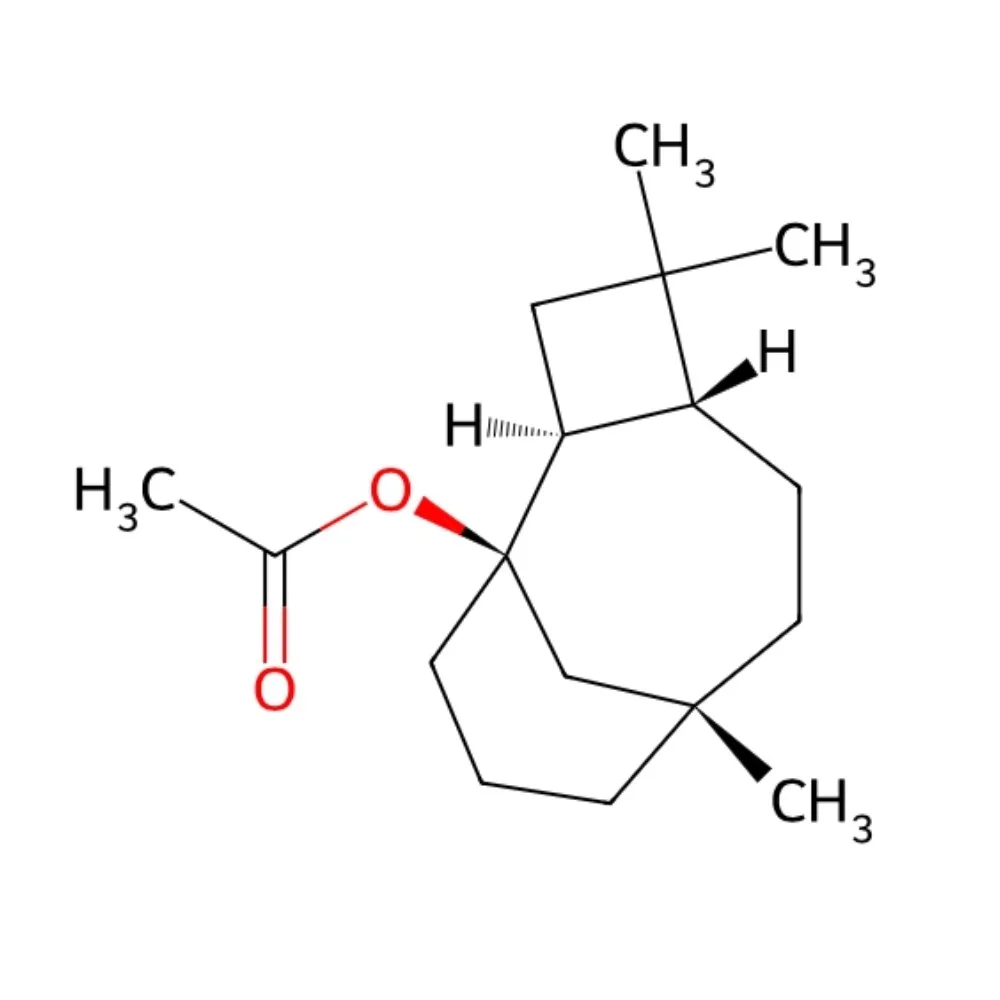
🔎 Chemical Name — Beta-caryophyllene alcohol acetate; Trimethyl tricyclododecanyl acetate
🧪 Synonyms — Vetynal, Caryophyllene acetate, β-Caryophyllene alcohol acetate
📂 CAS Number — 57082-24-3 / 75975-83-6 / 91771-52-7 / 68425-19-4
📘 FEMA Number — Not assigned (perfumery use only)
⚖️ Molecular Weight — 264.40 g/mol (C₁₇H₂₈O₂)
📝 Odor Type — Woody-Amber
📈 Odor Strength — Moderate to Strong
👃🏼 Odor Profile — Woody, earthy, dry-amber with terpenic and mild fruity-spicy facets. Reminiscent of vetiver essential oil with enhanced clarity and grapefruit-like brightness
⚗️ Uses — Vetiver reconstitution, woody-ambery bases, chypre compositions, functional fragrance
🧴 Appearance — Yellow to greenish-yellow liquid
What is Vetynal Fine?
Vetynal Fine is a trade name for beta-caryophyllene alcohol acetate, a synthetic fragrance ingredient derived through chemical transformation of beta-caryophyllene—a naturally occurring sesquiterpene found abundantly in clove oil (Syzygium aromaticum), as well as in black pepper, cannabis, rosemary, and hops essential oils. The material is produced through an acid-catalyzed rearrangement reaction where beta-caryophyllene undergoes hydroacetoxylation, resulting in a tricyclic caryolane structure with distinct woody-ambery olfactive properties.
The production process involves treating beta-caryophyllene with acetic acid in the presence of acidic catalysts, which causes ring rearrangement and simultaneous acetylation. This transformation converts the original bicyclic caryophyllene skeleton into a more complex tricyclic structure (caryolane), fundamentally altering both the molecular architecture and the olfactive character. The resulting acetate ester exhibits a significantly different aroma profile compared to its natural precursor, demonstrating how structural rearrangement can generate entirely new fragrance materials from abundant natural starting materials.
Vetynal Fine occupies an important position in modern perfumery as a cost-effective vetiver modifier and woody-amber building block, offering perfumers a cleaner, more refined alternative to certain natural vetiver fractions while maintaining the characteristic earthy-woody signature of vetiver essential oil.
Historical Background
The development of Vetynal Fine reflects the fragrance industry's ongoing pursuit of synthetic materials that can replicate, enhance, or replace natural essential oils. Beta-caryophyllene, the starting material for Vetynal's synthesis, was first isolated and identified in clove oil in the early 20th century, though its complex bicyclic structure wasn't fully elucidated until advances in spectroscopic techniques in the 1950s and 1960s.
The discovery that caryophyllene could undergo acid-catalyzed rearrangements to produce novel woody-ambery odorants emerged from systematic research into sesquiterpene chemistry conducted by major fragrance houses in the latter half of the 20th century. IFF (International Flavors & Fragrances) and other leading companies explored various chemical modifications of abundant natural sesquiterpenes, seeking to generate new perfumery materials with desirable olfactive properties and commercial viability.
The specific acetoxylation-rearrangement process that yields beta-caryophyllene alcohol acetate became commercially significant as perfumers recognized its utility in vetiver reconstitution and woody-amber accords. The "Vetynal" trade name emphasizes its vetiver-like character, while "Fine" denotes a refined grade with enhanced olfactive clarity and reduced harsh or terpenic notes compared to cruder preparations.
Throughout the late 20th and early 21st centuries, Vetynal Fine has established itself as a reliable workhorse ingredient in both fine fragrance and functional perfumery, particularly valued for its ability to contribute authentic vetiver facets at a fraction of the cost of natural vetiver oil or vetiveryl acetate derived from natural sources.
Olfactory Profile
Scent Family
Woody-Amber with Vetiver Character
Vetynal Fine bridges the woody and amber fragrance families, presenting a dry, earthy-woody base with transparent ambery warmth. Its olfactive signature closely resembles certain aspects of natural vetiver oil, particularly the lighter, more citrus-inflected Haitian vetiver type.
Main Descriptors
Primary: Woody, dry-earthy, amber
Secondary: Terpenic, mildly fruity, vetiver-like. Grapefruit facets, subtle spicy undertones
Character: Clean, diffusive, with excellent blending properties
The scent presents a distinct woody-earthy profile reminiscent of vetiver essential oil but with enhanced clarity and brightness. Unlike the deeper, more humid earthiness of natural vetiver, Vetynal Fine offers a drier, more transparent interpretation with pronounced grapefruit-like citrus facets—a characteristic it shares with nootkatone, another component contributing to vetiver's complexity. The terpenic quality provides freshness without becoming harsh or green, while subtle fruity-spicy nuances add dimension and interest.
At moderate concentrations, Vetynal Fine exhibits excellent diffusion and projects a recognizable vetiver signature that perfumers describe as "typical of vetiver oil but without the heavy woody density of vetiverol." This makes it particularly effective for creating lighter, more modern interpretations of vetiver accords.
Intensity
Moderate to strong odor strength with good diffusion and presence in fragrance compositions. The material can be detected at relatively low concentrations and maintains character across a range of dilutions, making it versatile for both accent and substantive use.
Tenacity
Good persistence with moderate-to-long-lasting qualities on skin and textiles. Vetynal Fine performs as a middle-to-base note material, providing lasting woody-ambery support without the extreme tenacity of natural vetiver oil or vetiveryl acetate. This intermediate longevity makes it useful for bridging volatile top notes and heavier base materials.
Volatility
Middle to base note
As an acetate ester of a rearranged sesquiterpene alcohol, Vetynal Fine exhibits moderate volatility characteristic of mid-to-base note materials. Its evaporation profile positions it in the heart and early base phases of fragrance development, where it contributes structural support and recognizable woody-vetiver character without dominating the composition.
Fixative Role
Functions as a moderate fixative in woody and amber compositions. While less tenacious than true vetiver oil or vetiverol-derived materials, Vetynal Fine helps stabilize mid-range notes and provides substantivity to accord structures. Its fixative contribution is more subtle than traditional heavy fixatives, making it suitable for modern transparent woody-amber constructions where excessive tenacity would be undesirable.
Applications in Fine Fragrance
Vetynal Fine serves primarily as a vetiver modifier and woody-ambery building block in perfume compositions. Its most significant application lies in vetiver reconstitution, where it can enhance or extend natural vetiver oils, providing recognizable vetiver character at reduced cost. Perfumers often use Vetynal Fine alongside natural vetiver materials to boost the citrus-grapefruit facets while maintaining overall vetiver authenticity.
In woody-amber fragrances, Vetynal Fine contributes dry, transparent woody notes with subtle ambery warmth, pairing effectively with amber bases, woody-aldehydic constructions, and modern woody-aromatic men's fragrances. The material works particularly well with cedar derivatives, patchouli, sandalwood alternatives, and synthetic ambery materials like Ambroxan or Iso E Super.
Chypre compositions benefit from Vetynal Fine's earthy-woody character, where it supports traditional oakmoss-patchouli-bergamot structures while adding contemporary clarity. The material's grapefruit-like facets create natural bridges between citrus top notes and woody-mossy bases.
The ingredient also finds use in fougère structures, contributing earthy depth without heaviness, and in green-woody accords where its terpenic freshness enhances aromatic-herbal complexes. Vetynal Fine blends seamlessly with geranium, lavender, clary sage, bergamot, and various ionones.
Performance in Formula
Vetynal Fine demonstrates excellent blending behavior and compatibility with a wide range of perfumery materials. Its moderate polarity and good solubility in alcoholic solutions ensure easy incorporation into fragrance formulas. The material remains stable under typical formulation conditions and shows good compatibility across various pH ranges.
In functional perfumery applications—including fabric care, air care, and household products—Vetynal Fine provides cost-effective woody-vetiver notes with satisfactory performance through wash cycles and extended exposure conditions. Its moderate substantivity on textiles makes it suitable for laundry applications where excessive tenacity might be problematic.
The ingredient's synthetic origin ensures consistent quality, batch-to-batch reproducibility, and freedom from the natural variability inherent in botanical extracts. This reliability makes Vetynal Fine particularly valuable for large-volume industrial applications requiring standardized performance.
Industrial & Technical Uses
Beyond fine fragrance, Vetynal Fine serves in multiple commercial fragrance applications. In functional perfumery, it appears in fabric softeners, detergents, air fresheners, household cleaners, and personal care products where its woody-amber character and moderate cost position make it economically attractive.
The material's vetiver-like signature makes it valuable in masculine grooming products including shaving preparations, aftershaves, deodorants, and body washes where woody-fresh character is desired. Its ability to boost perceived naturalness in fragrance formulations containing synthetic woody-amber materials increases its utility in mass-market applications.
Vetynal Fine also finds use in candles, reed diffusers, and home fragrance applications where its woody-earthy character contributes ambient sophistication without overwhelming intensity.
Regulatory & Safety Overview
IFRA Status
Permitted — No restrictions under IFRA Standards Amendment 51 (notified June 30, 2023). Beta-caryophyllene alcohol acetate (CAS 57082-24-3) may be used according to Good Manufacturing Practices across all 12 product categories without specific concentration limits. This ingredient does not appear on the IFRA prohibited or restricted lists. IFRA Standards Library
EU Cosmetics Regulation
Vetynal Fine (beta-caryophyllene alcohol acetate) is not listed among the 26 mandatory declarable allergens under EU Cosmetics Regulation (EC) No 1223/2009. The material is permitted for use in cosmetic applications throughout the European Union under standard cosmetic ingredient regulations.
FEMA Status
Not assigned — Vetynal Fine is not currently listed in the FEMA GRAS database and is therefore intended for perfumery applications only, not for direct use as a food flavoring ingredient.
Toxicology
Beta-caryophyllene alcohol acetate demonstrates a generally favorable safety profile typical of acetate esters used in perfumery. As with all fragrance materials, standard handling precautions should be observed during formulation, including proper ventilation, personal protective equipment, and adherence to occupational exposure guidelines.
Available toxicological data indicates that the material exhibits low to moderate acute toxicity and is considered safe for use in consumer products at concentrations typical for fragrance applications. The compound's structural relationship to naturally occurring caryophyllene—widely distributed in food plants and spices—supports its generally recognized safety profile.
No significant genotoxic, mutagenic, or carcinogenic concerns have been identified for this material at typical use concentrations. Skin sensitization potential is considered low to moderate, consistent with other terpene-derived fragrance materials.
References
Basenotes Community. (2024, June 14). "Caryophyllene acetate": 57082-24-3 vs 32214-91-8? [Forum discussion]. https://basenotes.com/community/threads/caryophyllene-acetate-57082-24-3-vs-32214-91-8.553063/
IES Ingredients. (2020, June 30). Vetynal Fine [Product information]. https://ies-ingredients.com/en/produit/vetynal-fine/
International Fragrance Association. (2023). IFRA Standards – 51st Amendment. https://ifrafragrance.org/safe-use/library
National Library of Medicine. (2024). Beta-caryophyllene alcohol acetate [Chemical information]. PubChem Compound Database; CID=90473619. https://pubchem.ncbi.nlm.nih.gov/compound/beta-Caryophyllene-alcohol-acetate
Pybus, D., & Sell, C. (Eds.). (2006). The chemistry of fragrances: From perfumer to consumer (2nd ed.). Royal Society of Chemistry. https://doi.org/10.1039/9781847555342
Vigon International. (2024). Caryophyllene acetate [Safety data sheet, Product 503009]. https://www.vigon.com/product/caryophyllene-acetate/