Image 1 of 2
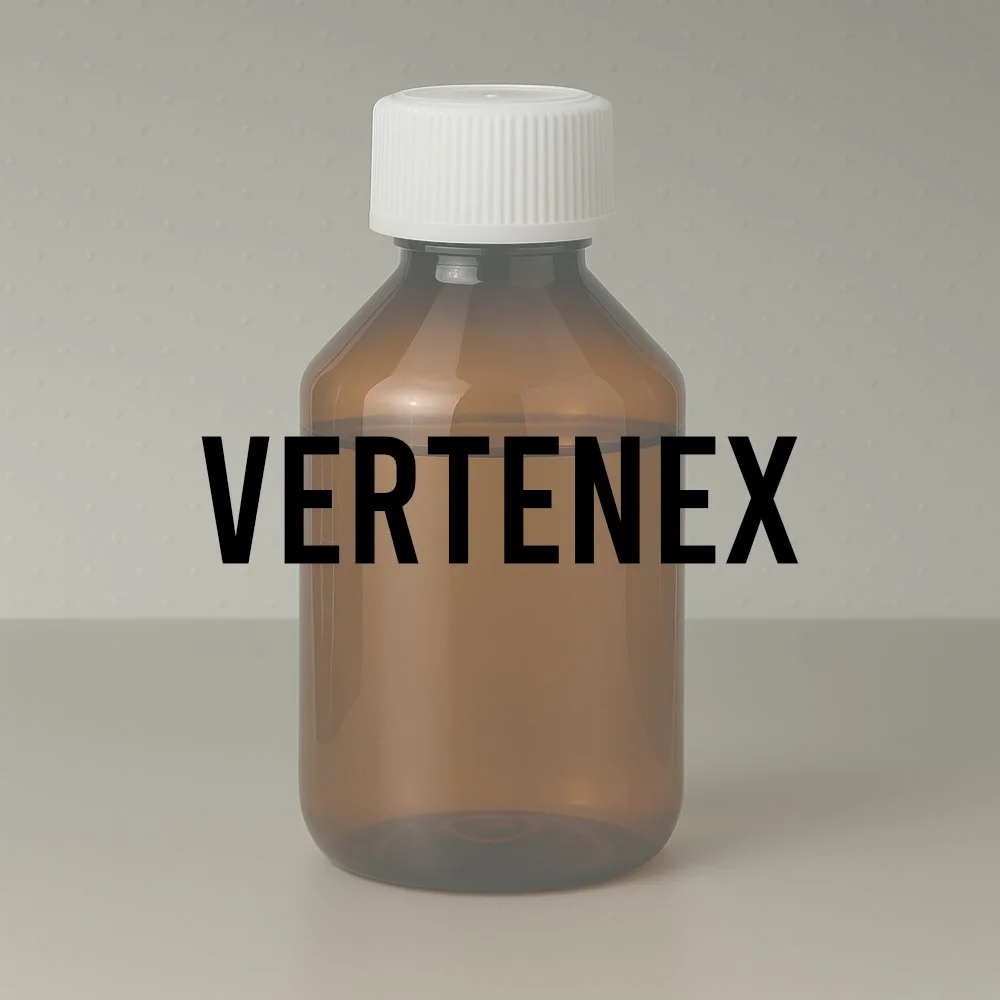 Image 2 of 2
VERTENEX - Synthetic Woody-Floral Ingredient Overview
🏭 Manufacturer — IFF
🔎 Chemical Name — 4-tert-Butylcyclohexyl acetate; 4-(1,1-Dimethylethyl)cyclohexyl acetate
🧪 Synonyms — PTBCHA (para-tertiary-butyl cyclohexyl acetate); Lorysia® (Firmenich); Oryclon; Woody acetate; Rodonex
📂 CAS Number — 32210-23-4
📘 FEMA Number — Not applicable
⚖️ Molecular Weight — 198.31 g/mol
📝 Odor Type — Woody, Floral-Powdery
📈 Odor Strength — Medium
👃🏼 Odor Profile — Sweet, rich, and woody with powdery iris-orris facets. The cis-isomer (predominant in high-quality versions) contributes more intense floral-fruity character, while the trans-isomer provides richer woody depth
⚗️ Uses — Volume enhancer and blender in functional fragrances; woody-floral modifier in fine perfumery; economical fixative for soaps and detergents
🧴 Appearance — Clear, colorless to very pale yellow liquid
What is Vertenex?
Vertenex is a synthetic acetate ester belonging to the alicyclic fragrance family, specifically engineered to provide broad olfactory compatibility, exceptional stability, and cost-effective volume in fragrance formulations. The compound exists as a mixture of cis and trans geometric isomers—each contributing distinct olfactory characteristics that combine to create its signature woody-floral profile.
The material's chemical structure features a cyclohexane ring with a tert-butyl substituent at the 4-position, acetylated at the hydroxyl group. This configuration places Vertenex alongside other modern synthetic perfumery materials designed to bridge natural and synthetic fragrance ingredients, offering both olfactory sophistication and formulation reliability at accessible price points.
What distinguishes Vertenex from simpler woody materials is its dual character: the trans-isomer contributes rich, classic cedarwood-type woodiness, while the cis-isomer adds powdery, iris-like florality with subtle fruity undertones. High-quality commercial products like Lorysia® (Firmenich's premium version) maximize the cis-isomer content to emphasize the softer, more floral-fruity aspects that perfumers prize for their versatility.
Historical Background
Vertenex emerged in the 1960s during the golden age of synthetic perfumery innovation, when fragrance houses sought economical alternatives to expensive natural materials like vetiver, iris, and premium cedarwood oils. The compound was developed through catalytic hydrogenation of 4-tert-butylphenol followed by acetylation—a straightforward two-step synthesis that made large-scale, cost-effective production feasible (Surburg & Panten, 2006).
IFF (International Flavors & Fragrances) commercialized Vertenex as part of their expanding portfolio of functional fragrance ingredients aimed at the booming soap and detergent markets of the mid-20th century. The timing proved fortuitous—post-war consumer culture demanded fragranced products at every price point, and Vertenex's stability in alkaline conditions made it ideal for soap perfumery where many natural materials failed.
The material's success stemmed from its remarkable versatility. While initially positioned for functional applications, creative perfumers discovered that Vertenex could enhance fine fragrances by adding volume and smoothness without dominating the composition. Its ability to "link" disparate notes—bridging woody bases with floral hearts or fresh top notes with oriental warmth—made it invaluable for complex accords.
By the 1990s, Firmenich developed Lorysia®, a premium-grade Vertenex with optimized cis-isomer content. This version emphasized the material's floral-fruity qualities, making it more suitable for fine fragrance applications while retaining the exceptional stability that made Vertenex indispensable for functional perfumery.
The compound has been referenced in perfumery literature as one of "the most successful perfume chemicals of the last few decades," appearing in countless fragrances from mass-market soaps to prestigious fine fragrances like Fidji (1966), where it served as a transitional note between woody and green-fresh elements (Calkin & Jellinek, 1994).
Olfactory Profile
Scent Family: Woody, Floral-Powdery, Iris
Main Descriptors: Vertenex presents a sweet, woody-floral character dominated by powdery iris-orris notes with clean, fresh undertones. The aroma sits between natural cedarwood and violet-iris effects, offering a soft, rounded woodiness that lacks the sharp, medicinal qualities of some cedar derivatives. The profile includes subtle fruity nuances (particularly in high-cis versions like Lorysia®) reminiscent of apple or pear skin, along with clean laundry-like freshness that suggests linalyl acetate or soft musks.
The material's complexity derives from its isomeric composition. Premium grades emphasizing the cis-isomer deliver more pronounced floral-powdery character with delicate fruitiness, while formulations richer in trans-isomer lean toward classic woody-amber territories. This duality allows perfumers to select different commercial versions (standard Vertenex vs. Lorysia®) based on desired olfactory emphasis.
The overall impression is clean, versatile, and diffusive without being aggressive—qualities that make Vertenex ideal for "invisible" enhancement of compositions where volume and body are needed without strong character assertion.
Intensity: Medium strength with moderate diffusion. Effective at trace levels (0.5-1%) for subtle enhancement, scalable to 8% for dominant woody-floral effects. The material's moderate volatility ensures sustained presence without overwhelming top notes.
Tenacity: Good longevity with approximately 8-hour substantivity at 100% concentration. Functions primarily in the heart-to-base transition, providing extended woody-floral presence that supports composition structure throughout middle development phases.
Volatility: Heart note ingredient with extended persistence. The acetate ester structure and molecular weight (198.31) position Vertenex below highly volatile top notes but above heavy base fixatives, making it ideal for mid-composition enhancement and note transitions.
Applications in Fine Fragrance
While Vertenex found initial success in functional perfumery, creative perfumers discovered its value in fine fragrance as a sophisticated blender and volume enhancer. The material excels in violet and iris compositions, where it reinforces powdery-floral character while adding soft woody depth that prevents compositions from becoming too sweet or one-dimensional.
In woody fragrances, Vertenex provides smooth, rounded cedarwood effects that complement natural cedarwood oils, synthetic materials like Iso E Super, and woody-amber bases. The subtle iris-powdery facet adds sophistication to simple woody accords, elevating them beyond linear cedar-sandalwood combinations.
For fougère compositions, Vertenex bridges herbaceous top notes (lavender, bergamot) with woody-mossy bases, creating seamless transitions while adding volume without heaviness. The clean, fresh aspects harmonize naturally with aromatic herbs and citrus while the woody character supports oakmoss, coumarin, and tonka bean.
The material pairs exceptionally well with ionones (particularly alpha-isomethyl ionone), cedarwood derivatives (Cedryl acetate, Vertofix®), floral absolutes (rose, jasmine, ylang-ylang), and modern musks. Its neutral-positive character allows it to enhance nearly any fragrance family without introducing unwanted facets.
Performance in Formula
Vertenex's primary technical advantage lies in its exceptional stability across diverse formulation conditions. The compound demonstrates outstanding performance in alkaline systems (soaps, shampoos, pH 8-11) where many natural materials and delicate synthetics degrade. This alkali resistance made Vertenex indispensable for soap perfumery during an era when fragranced soaps dominated personal care markets.
The material maintains olfactory integrity in both water-based and oil-based systems, showing good solubility in alcoholic solutions, surfactant formulations, and lipophilic carriers. Temperature stability supports applications in candles and heated systems without significant degradation or note distortion.
Cost-effectiveness represents another crucial performance attribute. Vertenex delivers substantial olfactory impact at modest inclusion levels, making it ideal for budget-conscious formulations requiring volume and presence. This economic efficiency explains its ubiquity in mass-market fragrances where every basis point of cost matters.
The compound's versatility as a blender allows formulators to smooth harsh transitions, add roundness to angular compositions, and create seamless note progressions—all while contributing recognizable woody-floral character that consumers associate with quality fragrances.
Industrial & Technical Uses
Vertenex dominates functional fragrance applications in soaps (both toilet and laundry), detergents, fabric softeners, shampoos, and household cleaners. Its stability in alkaline and surfactant-heavy systems, combined with low cost and broad compatibility, makes it a workhorse ingredient for industrial perfumery.
In fine fragrance, the material appears across price segments—from mass-market celebrity fragrances to prestige perfumes—wherever woody-floral volume is needed without the expense of natural iris or vetiver materials. The compound's ability to extend and amplify more expensive ingredients allows perfumers to achieve luxurious effects at controlled costs.
Personal care applications include body lotions, creams, and hair care products where Vertenex's moderate substantivity provides lasting fragrance without interfering with product performance or causing skin sensitivity.
Regulatory & Safety Overview
IFRA Status: Vertenex is not specifically restricted under IFRA Amendment 51. The compound has been evaluated by RIFM (Research Institute for Fragrance Materials) with comprehensive toxicological and dermatological assessments supporting its safe use in fragrances. No concentration limits apply across product categories, reflecting favorable safety profile.
EU Cosmetics Regulation: Classified as Skin Sensitizer Category 1 and Aquatic Chronic Category 2 under CLP (Classification, Labeling and Packaging) regulations, requiring appropriate risk assessment and labeling. Approved for cosmetic use under EU Regulation 1223/2009 when proper safety assessments confirm safe concentration levels. Does not contain reportable allergens requiring declaration per Annex III (Sigma-Aldrich, 2025).
Safety Profile: Human maximization studies (RIFM, 1976) demonstrated low sensitization potential under normal use conditions. Acute toxicity data indicate low oral and dermal toxicity. Eye irritation studies show minimal to mild irritation potential. The compound's long market history (50+ years) without significant adverse event reports supports its safety profile when used appropriately in fragrances.
GHS Classification:
H317: May cause an allergic skin reaction
H411: Toxic to aquatic life with long-lasting effects
Handling: Standard perfumery material precautions apply. Flash point exceeds 200°F (>93°C), classifying as combustible but not highly flammable. Vapor pressure remains low (<0.03 mm Hg at 20°C), minimizing inhalation exposure concerns during normal handling (Belsito et al., 2008).
Environmental Considerations: Log Kow of 4.42 indicates high lipophilicity and potential bioaccumulation. Appropriate wastewater treatment required for industrial-scale use to prevent aquatic ecosystem impacts.
References
Belsito, D., Bickers, D., Bruze, M., Calow, P., Greim, H., Hanifin, J. M., Rogers, A. E., Saurat, J. H., Sipes, I. G., & Tagami, H. (2008). Fragrance material review on 4-tert-butylcyclohexyl acetate. Food and Chemical Toxicology, 46(11), S15-S23. https://doi.org/10.1016/j.fct.2008.06.041
Calkin, R. R., & Jellinek, J. S. (1994). Perfumery: Practice and principles. John Wiley & Sons.
ChemicalBook. (2025). 4-tert-Butylcyclohexyl acetate (32210-23-4). Retrieved October 26, 2025, from https://www.chemicalbook.com/ChemicalProductProperty_EN_CB7218990.htm
Perfume Extract. (2024). Vertenex [Technical data sheet]. Retrieved October 26, 2025, from https://perfumeextract.co.uk/product/vertenex/
PubChem. (2025). PubChem Compound Summary for CID 36081, 4-tert-Butylcyclohexyl acetate. Retrieved October 26, 2025, from https://pubchem.ncbi.nlm.nih.gov/compound/4-tert-Butylcyclohexyl-acetate
Sigma-Aldrich. (2025). 4-tert-Butylcyclohexyl acetate, mixture of cis and trans. Retrieved October 26, 2025, from https://www.sigmaaldrich.com/US/en/product/aldrich/347736
Surburg, H., & Panten, J. (2006). Common fragrance and flavor materials: Preparation, properties and uses (5th ed.). Wiley-VCH.