Image 1 of 2
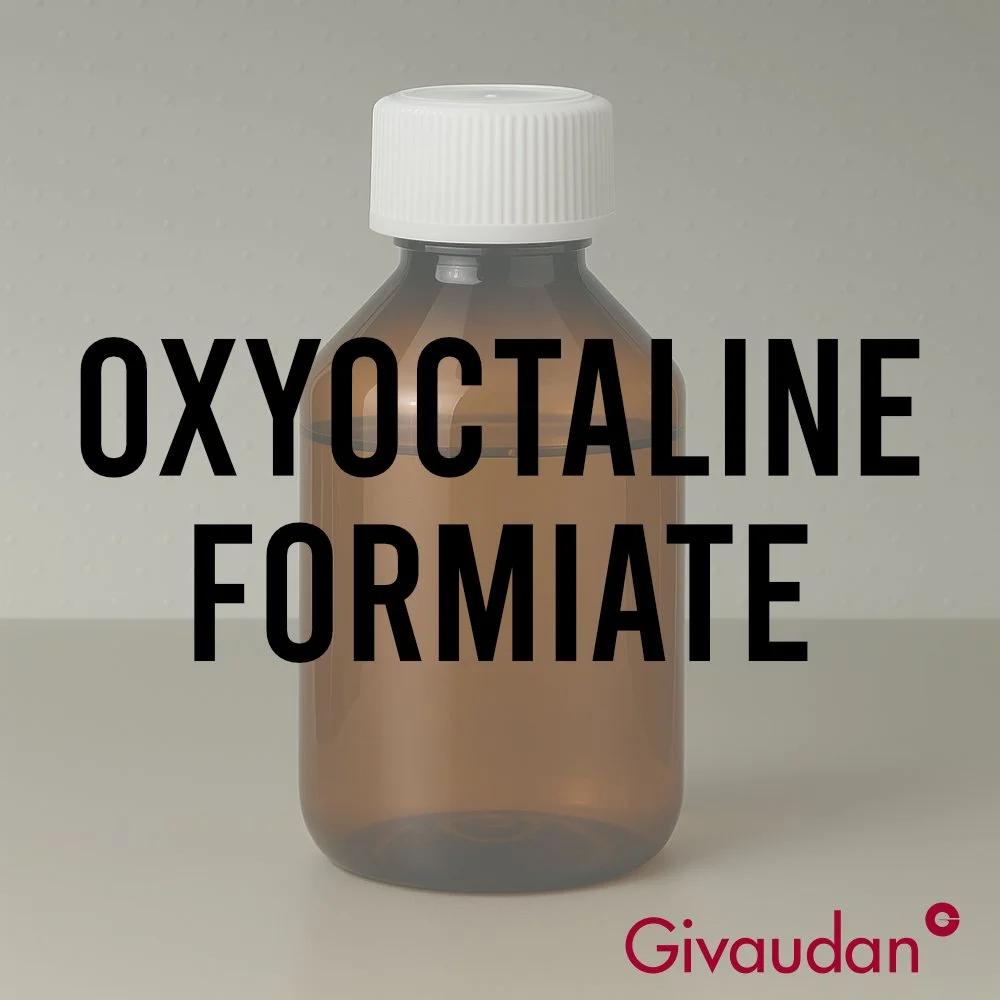 Image 2 of 2
Oxyoctaline Formate (CAS 65405-72-3) - Technical Ingredient Overview
🏭 Manufacturer — Givaudan
🔎 Chemical Name — 1,2,3,4,4a,7,8,8a-Octahydro-2,4a,5,8a-tetramethyl-1-naphthalenol formate
🧪 Synonyms — Oxyoctaline Formiate, Amber Formate, 2,4a,5,8a-Tetramethyl-1,2,3,4,4a,7,8,8a-octahydro-1-naphthyl formate, 2,5,9,10-Tetramethyl-5,6-dehydro-1-decalyl formate, 1,3,6,7-Tetramethylbicyclo[4.4.0]dec-7-en-2-yl formate
📂 CAS Number — 65405-72-3
📘 EINECS Number — 265-742-1
📘 FEMA Number — Not assigned (not used in flavor applications)
⚖️ Molecular Weight — 236.35 g/mol
🧬 Molecular Formula — C₁₅H₂₄O₂
📝 Odor Type — Woody-ambery
📈 Odor Strength — Medium (5–6/10) — restrained yet lasting presence
👃🏼 Odor Profile — Original, woody-ambery character with dry-powdery nuances; blends seamlessly with natural woody notes like cedar, vetiver, and patchouli; imparts an elegant olibanum (frankincense) effect with resinous, slightly balsamic undertones; fresh, moist woody character with sustained tenacity
⚗️ Uses — Blender and fixative for woody-amber accords, enhancer for natural woody materials, olibanum-effect contributor, base-to-heart note bridge in modern woody compositions, structural support in minimalist and functional fragrances
🧴 Appearance — Colorless to pale yellow clear liquid
What is Oxyoctaline Formate?
Oxyoctaline Formate is a synthetic fragrance ingredient developed by Givaudan, classified structurally as a formate ester of an octahydronaphthalenol. This bicyclic terpenoid formate belongs to the family of woody-amber materials, designed to enrich and structure contemporary woody compositions with a distinctive dry-powdery character.
Unlike more overtly powerful woody-ambers such as Ambroxan, Norlimbanol, or Ambrocenide, Oxyoctaline Formate offers a restrained elegance characterized by medium olfactory strength and a subtle, sophisticated woody-resinous profile. Its unique contribution lies in its ability to function as both a blender (harmonizing diverse woody notes) and a fixative (providing lasting background depth without dominating the composition).
Structurally, Oxyoctaline Formate features a partially hydrogenated naphthalene ring system with four methyl substituents and a formate ester functional group. This molecular architecture confers low volatility, chemical stability, and excellent compatibility with both natural woody materials (cedarwood, vetiver, patchouli, sandalwood) and synthetic woody-ambers (Iso E Super, Ambroxan, Cedramber).
The material’s signature trait is its olibanum-like effect—an elegant, dry, slightly resinous nuance reminiscent of high-quality frankincense. This makes it particularly valuable in compositions seeking to evoke incense, sacred woods, or minimalist woody sophistication without resorting to heavy amber accords or overtly animalic fixatives.
Historical Background
Oxyoctaline Formate was developed by Givaudan as part of the company’s extensive research into woody-amber materials during the late 20th century, a period marked by intense innovation in synthetic woody notes for modern perfumery. While the exact year of introduction is not publicly documented, the material emerged during an era (1970s–1990s) when perfumers sought alternatives to traditional balsamic ambers and heavy sandalwood fixatives, driven by sustainability concerns, cost considerations, and evolving aesthetic preferences toward drier, more transparent woody compositions.
The Woody-Amber Revolution (1970s–1990s)
The development of Oxyoctaline Formate must be understood within the broader context of the “woody-amber revolution” in synthetic perfumery:
1970s: IFF introduced Iso E Super (1978), establishing the woody-cedar-ambery category with its velvety, diffusive character
1980s: Development of materials like Cedramber (IFF, 1966 commercial launch) and early Givaudan woody-ambers
1990s: Proliferation of synthetic woody materials such as Javanol (Givaudan), Timbersilk, and various norlimbanol derivatives
Oxyoctaline Formate represents Givaudan’s contribution to this family, distinguished by its moderate strength, olibanum-like resinous dryness, and exceptional blending properties rather than the sharp, diffusive “radiance” of materials like Ambroxan or the powerful linearity of Norlimbanol.
Design Philosophy
Unlike earlier woody-ambers derived from terpene chemistry (e.g., Ambroxan from sclareol via Ambroxide synthesis), Oxyoctaline Formate’s bicyclic structure suggests design inspiration from partially hydrogenated naphthalene systems—a structural class that includes various decalin-based fragrance materials. The incorporation of a formate ester functional group is particularly noteworthy, as formate esters generally impart a fresh, slightly fruity-green lift that tempers the dryness of heavily substituted polycyclic structures.
This design results in a material that:
Maintains woody-ambery depth without cloying sweetness
Provides fixation without excessive tenacity
Enhances natural materials without masking their individual character
Functions across multiple fragrance phases (heart-to-base transition)
Olfactory Profile
Scent Family: Woody-ambery with dry-powdery and resinous facets
Main Descriptors:
Oxyoctaline Formate presents a refined, multifaceted woody-amber profile characterized by:
Woody-ambery core — dry, elegant, non-sweet woody character with subtle amber warmth
Olibanum (frankincense) effect — resinous, slightly balsamic, incense-like dryness reminiscent of high-quality boswellia resin
Fresh, moist woody character — maintains a “living wood” quality rather than dried or fossilized timber
Dry-powdery nuance — subtle powderiness that adds sophistication without overt cosmetic character
Restrained elegance — medium strength allows it to support without dominating; blends seamlessly into woody structures
Concentration-Dependent Character:
At 0.5–2%: Subtle background woody-amber support; enhances natural woody materials with refined dryness
At 3–5%: Noticeable olibanum-like resinous character; adds structure and tenacity to woody accords
At 6–10%: Dominant woody-ambery presence with pronounced dry-powdery and incense-like facets
Intensity: Medium (5–6/10) — powerful enough to provide structural support but restrained compared to materials like Norlimbanol or Ambroxan
Tenacity: Good to excellent — lasts approximately 1 week on blotters; provides sustained base note presence without excessive heaviness
Volatility: Low — evaporates slowly, functioning primarily as a base note with some influence in the heart
Fixative Role: Oxyoctaline Formate acts as both a blender (harmonizing disparate woody notes into cohesive accords) and a fixative (extending the life of more volatile woody materials like cedarwood oils or cypress). Its moderate strength prevents it from overwhelming delicate natural materials, making it ideal for supporting rather than leading woody compositions.
Applications in Fine Fragrance
Oxyoctaline Formate is used at concentrations ranging from 0.5% to 10% in perfume compounds, with typical usage around 2–5% for optimal blending and fixative effects.
Woody Compositions
Cedar-vetiver-patchouli accords — enhances natural woody materials with dry, resinous depth
Sandalwood reconstructions — adds fixation and olibanum-like dryness to synthetic sandalwood bases
Modern woody minimalism — provides structural backbone in clean, transparent woody fragrances
Woody-aromatic fougères — supports lavender, oakmoss, and woody notes with elegant dryness
Amber & Oriental Fragrances
Dry amber accords — contributes non-sweet, resinous amber character
Incense-focused compositions — reinforces olibanum and myrrh with subtle woody support
Woody-oriental structures — bridges spicy-resinous heart notes with woody-ambery base
Functional & Minimalist Perfumery
Home care applications — candles, room diffusers, detergents (good burning effectiveness, pH tolerance)
Cosmetic applications — lotions, creams, hair care (pairs well with musks for low-impact elegance)
Minimalist compositions — provides background depth without overpowering delicate structures
Pairing Behavior:
Synergizes with cedarwood oils, vetiver, patchouli, cypress — enhances natural woody materials
Complements Iso E Super, Ambroxan, Cedramber, Javanol — blends seamlessly with synthetic woody-ambers
Harmonizes with frankincense/olibanum, myrrh, labdanum — reinforces resinous dryness
Supports white musks (Galaxolide, Habanolide), macrocyclic musks — adds structure to soft musk bases
Performance in Formula
Oxyoctaline Formate is notably user-friendly compared to harsher woody-ambers, with moderate strength and excellent blending properties.
Dosage Guidelines:
0.5–2%: Subtle woody-amber support; enhances natural materials without overt presence
3–5%: Standard usage for structural woody-amber character with olibanum effects
6–10%: Higher concentrations for dominant woody-ambery profiles or when maximum fixation is needed
Stability:
Chemically stable — minimal discoloration under light or heat exposure
pH tolerance — performs well in alkaline soap bases and acidic formulations
Burning effectiveness: Good — suitable for candles and combustible applications
Substantivity (Damp): Good — retains performance in high-moisture environments (lotions, body washes)
Substantivity (Dry): Moderate — adequate performance on dry substrates (fabrics, paper)
Blending Considerations: Oxyoctaline Formate’s moderate strength and non-aggressive character make it ideal for:
Layering with multiple woody materials — creates depth without muddy, heavy effects
Supporting natural ingredients — enhances without masking individual characteristics
Minimalist formulations — provides structure in “less is more” compositions
Functional applications — contributes lasting woody-amber notes without overpowering consumer products
Vapor Pressure (20°C): 0.0011 hPa — extremely low, confirming its base note character and fixative properties
Industrial & Technical Uses
Beyond fine perfumery, Oxyoctaline Formate finds applications in:
Functional Perfumery:
Home care products — candles, incense sticks, room sprays (good burning effectiveness)
Personal care — lotions, creams, body washes (pH-stable, non-irritating)
Fabric care — detergents, fabric softeners (substantivity on textiles)
Niche & Artisanal Perfumery:
Incense-focused fragrances — supports olibanum, myrrh, and sacred wood themes
Minimalist woody compositions — provides depth without complexity
Natural-synthetic hybrids — bridges natural extracts with synthetic woody bases
Regulatory & Safety Overview
IFRA Status:
Not restricted under IFRA 51st Amendment (2023)
No specific concentration limits across all product categories
Generally recognized as safe for use in fragrances when formulated according to good manufacturing practices
IFRA Standards Library: https://ifrafragrance.org/standards-library
EU Cosmetics Regulation (EC 1223/2009):
Not listed among the 26 declarable fragrance allergens
Permitted for use in cosmetic products without specific restrictions
Compliance maintained through standard safety assessment protocols
CLP/GHS Classification:
Not classified as a sensitizer or toxic substance under current ECHA listings
No specific hazard statements (H-codes) assigned
Considered safe for routine handling in perfumery applications
ECHA Substance Database:
Registered under REACH (EC Number: 265-742-1)
Available safety data consistent with low-hazard profile
Toxicology:
Low acute toxicity based on structural analogs
Non-sensitizing in standard predictive assays
No known phototoxicity or reproductive toxicity concerns
Safe for use at typical concentrations in fragrance applications
Handling & Storage:
Store in tightly sealed containers away from heat and direct sunlight
Stable under normal storage conditions
No special PPE required beyond standard perfumery hygiene practices (gloves, eye protection if splashing risk)
References
Givaudan. (2020). Oxyoctaline Formate – Technical product data. Givaudan Fragrance Division. Retrieved from https://www.givaudan.com/fragrance-beauty/eindex/oxyoctaline-formate
Perfumer & Flavorist. (2007). Perfumer’s notes: Javanol. Perfumer & Flavorist, 32(1), 32–36.
PubChem. (2025). Oxyoctaline Formate (CID 11545872). National Center for Biotechnology Information. Retrieved from https://pubchem.ncbi.nlm.nih.gov
ECHA (European Chemicals Agency). (2025). Substance information: Oxyoctaline Formate (EC 265-742-1). Retrieved from https://echa.europa.eu
Sell, C. S. (2019). The chemistry of fragrances: From perfumer to consumer (3rd ed.). Royal Society of Chemistry.
Arctander, S. (1969). Perfume and flavor chemicals (Vol. II). Self-published.
IFRA. (2023). IFRA Standards – 51st Amendment. International Fragrance Association. Retrieved from https://ifrafragrance.org