 Image 1 of 1
Orange Flower Absolute (CAS 8030-28-2) – Technical Ingredient Overview
🔎 Chemical Name — Citrus aurantium var. amara flower extract
🧪 Synonyms — Orange Blossom Absolute, Bitter Orange Flower Absolute, Absolute Orange Flowers, Fleur d'Oranger Absolute
📂 CAS Number — 8030-28-2
📝 Odor Type — Floral
📈 Odor Strength — Medium to high
👃🏼 Odor Profile — Rich, warm, honeyed floral with sweet citrus, green, indolic, and balsamic undertones
⚗️ Uses — Fine fragrance, aromatherapy, cosmetics, soap making, candle crafting
🧴 Appearance — Deep orange to brownish-green, transparent, mobile liquid
What is Orange Flower Absolute?
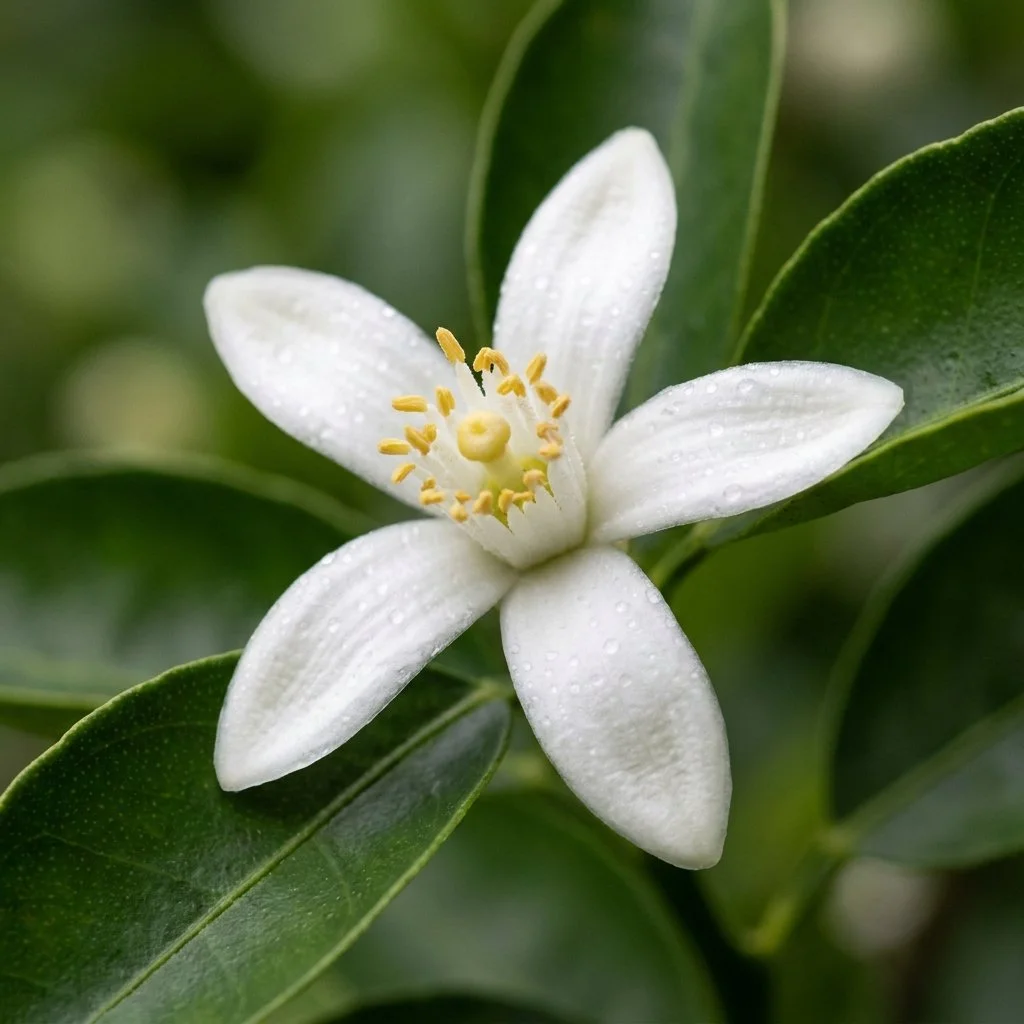
Orange Flower Absolute is a precious natural extract obtained by solvent extraction of the fresh flowers of the bitter orange tree (Citrus aurantium var. amara). The bitter orange tree, native to Southeast Asia and now widely cultivated across the Mediterranean basin — particularly in Tunisia, Egypt, Morocco, and southern France — yields several distinct aromatic products: neroli oil (from steam distillation of the flowers), petitgrain oil (from the leaves and twigs), and the absolute (from solvent extraction of the blossoms). Among these, the absolute is the richest and most complex, capturing the full depth of the flower's aromatic character.
Historical Background
The bitter orange tree has been treasured for centuries across the Arab world and the Mediterranean. Orange blossom water, a byproduct of neroli distillation, has long been a staple in Middle Eastern and North African cuisine and rituals. In 17th-century Europe, the Princess of Nerola popularized the distilled oil — giving rise to the name "neroli." The absolute, developed later through advances in solvent extraction, became a cornerstone of French haute parfumerie, prized for its unparalleled richness compared to the lighter distilled oil.
Olfactory Profile
Scent Family: Floral — white floral, citrus-floral
Main Descriptors: The absolute opens with a radiant, sweet-citrus top that quickly unfolds into a lush, honeyed, narcotic white floral heart. Deep indolic and animalic facets give it a seductive, skin-like warmth, while green and herbaceous undertones lend freshness. The drydown is balsamic, powdery, and long-lasting.
Intensity: Highly concentrated — even small amounts impart significant character to a blend.
Tenacity: Exceptional. Lasts over 120 hours on a smelling strip; excellent substantivity on skin.
Volatility: Heart to base note. Provides lasting depth and radiance.
Performance in Formula
Fixative Power — Outstanding; anchors lighter citrus and green notes in the blend
Radiance Effect — Strong diffusion that adds luminosity and presence
Stability — Terpenes may polymerize when oxidized; methyl anthranilate can react with aldehydes causing discoloration in alkaline bases
Compatibility — Excellent combinations with all citrus oils, petitgrain, jasmine, rose, myrrh, sandalwood, and musks
Solubility — Some solubility challenges in aqueous formulas; performs best in alcoholic bases
Regulatory & Safety Overview
IFRA Status: Restricted — max 0.7% in finished product (Category 4, IFRA 51st Amendment). Contains linalool and limonene, both EU-regulated allergens requiring label declaration above 0.001% in leave-on products.
EU Cosmetics Regulation: Permitted; allergen disclosure required for linalool and limonene content.
Toxicology
Sensitization — Low risk at recommended IFRA usage levels; contains potential allergens (linalool, limonene)
Phototoxicity — Not considered phototoxic at standard use levels
General — Safe for use within IFRA guidelines
References
Arctander, S. — Perfume and Flavor Materials of Natural Origin
Surburg, H. & Panten, J. — Common Fragrance and Flavor Materials
The Good Scents Company — Bitter Orangeflower Absolute data sheet
IFRA — 51st Amendment, Standards Library