 Image 1 of 2
 Image 2 of 2
Mimosa Concrete Technical Ingredient Overview
🔎 Botanical Name — Acacia dealbata Link; Acacia decurrens Willd. var. mollis (syn. Acacia decurrens var. dealbata)
🧪 Synonyms — Mimosa concrète; Mimosa flower wax; Silver wattle extract; Black wattle concrete
📂 CAS Number — 8031-03-6 (mimosa absolute); 93685-96-2 (EINECS for Acacia dealbata extract)
📘 FEMA Number — Not applicable (not used in flavors)
⚖️ Molecular Weight — Complex mixture (not applicable for natural extract)
📝 Odor Type — Floral-woody
📈 Odor Strength — Low to medium (concrete); Medium to strong (absolute)
👃🏼 Odor Profile — Sweet-woody, fatty, deep-floral with slightly green and honeylike undertones; waxy-sweet character reminiscent of beeswax; powdery-floral dry-down with violet nuances; less spicy and more naturalistic than cassie absolute
⚗️ Uses — Fine fragrance (lilac, muguet, violet, new mown hay, herbaceous-coumarinic compositions), fixative in soap perfumes, modifier in floral-woody accords, luxury perfumery
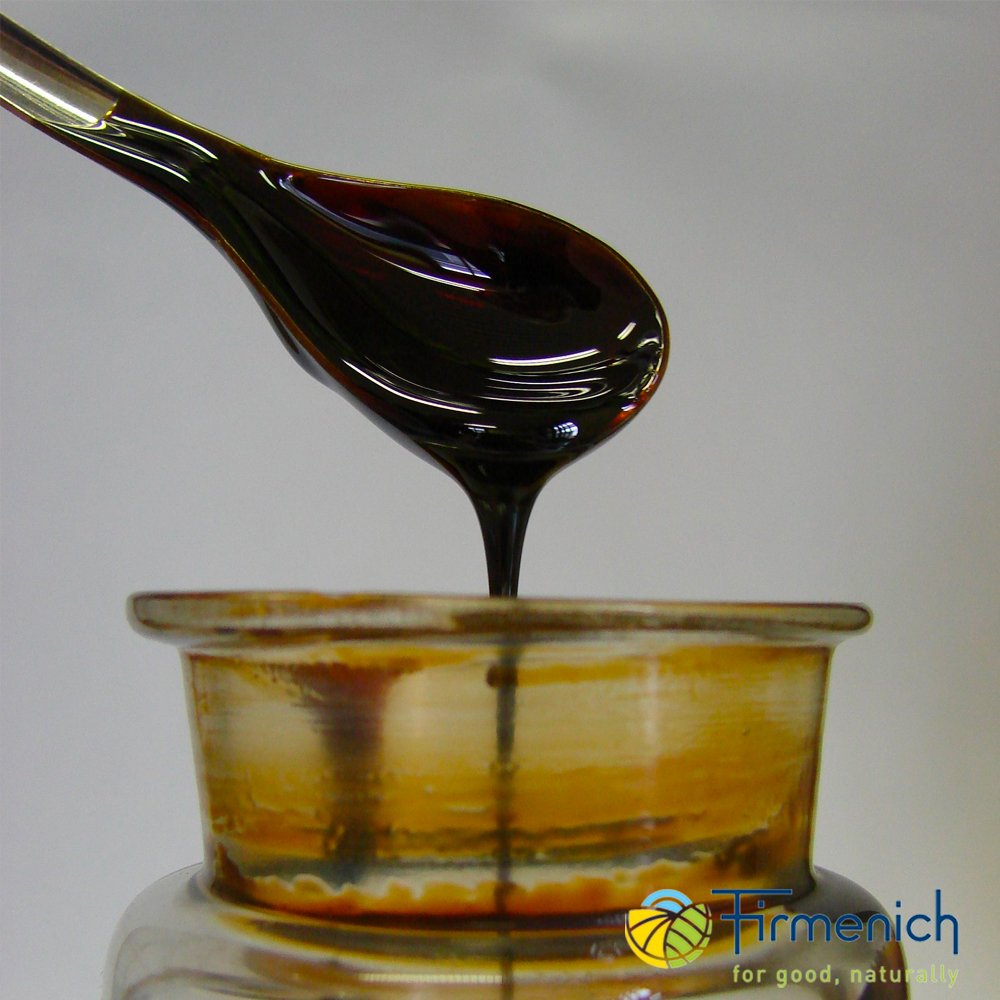
🧴 Appearance — Hard, wax-like, pale yellow to whitish-yellow opaque solid (concrete); Viscous, amber-colored to yellowish liquid resembling fresh honey (absolute)
What is Mimosa Concrete?
Mimosa concrete is a natural aromatic extract obtained through solvent extraction (typically petroleum ether or hexane) of the flowering branches—including flowers and twig-ends—of Acacia dealbata Link and Acacia decurrens Willd. var. mollis, members of the Fabaceae (formerly Mimosaceae) family (Arctander, 1960). Despite its common name "mimosa," the botanical source is actually an acacia species native to southeastern Australia, where it grows as the "silver wattle" or "black wattle."
The material exists in two principal commercial forms:
Mimosa Concrete: A waxy, semi-solid extraction product containing both volatile aromatic compounds and non-volatile waxes, lipids, and plant material. The concrete is characterized by a hard, wax-like consistency at room temperature and represents the primary extraction product.
Mimosa Absolute: A refined liquid product obtained by alcohol washing of the concrete, removing waxes and achieving higher concentration of aromatic molecules. The absolute is completely soluble in ethanol and represents the form most commonly used in fine perfumery.
The extraction process typically yields 0.1-0.75% concrete based on fresh plant material weight, with the absolute representing approximately 20-25% of the concrete mass (Arctander, 1960). Unlike steam-distilled essential oils, solvent extraction preserves heat-sensitive and high-molecular-weight aromatic compounds that would be lost or altered through distillation, including phenylethyl alcohol, anisic compounds, and long-chain fatty constituents.
Chemically, mimosa concrete/absolute comprises a complex mixture including:
Volatile components: Straight-chain hydrocarbons (C₆-C₂₆), esters, aldehydes, diethyl acetals, alcohols, and ketones
Key odorants: 2-Phenylethyl alcohol, methyl anisate, ethyl palmitate, (Z)-heptadec-8-ene, heptadecane, nonadecane, palmitic acid
Non-volatile components: Triterpenoids (lupenone, lupeol), waxes, and plant lipids
The odor profile, while distinctly floral, differs notably from the fresh flower scent due to extraction methodology and the inclusion of twig material, which contributes woody-green facets valued in perfumery compositions.
Historical Background
The botanical history of mimosa in perfumery reflects the broader patterns of European colonial botanical exploration and the subsequent commercialization of Australian flora for fragrance applications.
Introduction to Europe and Cultivation
Acacia dealbata was introduced to Europe as an ornamental species in the early 19th century, with documented imports around 1780-1820 during Captain Cook's expeditions to Australia and subsequent botanical exchanges (Arctander, 1960). The species' ornamental value—spectacular displays of golden-yellow, intensely fragrant flower clusters blooming in late winter to early spring—led to widespread cultivation in Mediterranean climates, particularly southern France.
By the late 19th and early 20th centuries, Acacia dealbata had become naturalized in the Côte d'Azur region, where climatic conditions proved ideal for commercial cultivation. The Grasse region, already established as a center for flower cultivation and perfume extraction, developed mimosa as a significant crop alongside jasmine, rose, and tuberose.
Development of Commercial Extraction
Commercial solvent extraction of mimosa flowers began in earnest during the early-to-mid 20th century, coinciding with broader industry adoption of volatile solvent techniques replacing traditional enfleurage methods. The production of mimosa concrete and absolute became concentrated in:
Southern France (Grasse, Cannes, surrounding regions): Primary production center, utilizing locally cultivated trees
Morocco: Developed as secondary production source from mid-20th century
Italy: Limited production in northern regions
India: More recent production development, primarily for local and Asian markets
The 1956 Frost and Industry Impact
A significant historical event that shaped the mimosa industry occurred in January-February 1956, when a severe frost destroyed mimosa tree populations across large areas of southern France (Arctander, 1960). This catastrophic weather event resulted in:
Near-total loss of flowering capacity for 1-2 years
Mimosa absolute becoming virtually unavailable commercially for approximately two years
Increased development of synthetic mimosa bases and reconstructions during the shortage period
Recognition of supply chain vulnerability, leading to diversification of production sources
The 1956 event remains a notable case study in natural perfumery material vulnerability to climatic conditions and agricultural risk.
Contemporary Production
Current annual global production of mimosa concrete is estimated at 200 kg to 1 ton (varying with demand and climatic conditions), yielding approximately 100-300 kg of absolute (Arctander, 1960). Morocco has emerged as the primary production source in recent decades, with France maintaining smaller-scale premium production. The material remains expensive relative to many other floral extracts due to:
Labor-intensive manual harvesting (flowers harvested at peak bloom)
Low extraction yields
Seasonal availability (late winter/early spring harvest)
Specialized processing requirements
Olfactory Profile
Scent Family
Mimosa concrete and absolute belong to the floral-woody fragrance family, with powdery-sweet and green-herbaceous characteristics placing them in a distinctive category between true florals and woody-balsamic materials.
Main Descriptors
The olfactory character of mimosa materials presents a nuanced profile that differs significantly between concrete and absolute forms, but shares core characteristics:
Mimosa Concrete:
Primary facets: Sweet-woody, fatty, deep-floral
Secondary facets: Waxy (reminiscent of beeswax), honeylike, slightly green, Faintly powdery, subtle violet undertones.
Mimosa Absolute:
Primary facets: Rich, floral-woody, sweet
Secondary facets: Slightly green, honeylike, more pronounced floral sweetness than concrete
Tertiary facets: Powdery-floral dry-down, subtle fruity nuances, delicate herbaceous notes
Comparative context: Arctander (1960) notes that mimosa absolute is "sweeter and more natural flower-like, but less spicy-complex than cassie," the related extract from Acacia farnesiana. Unlike cassie's indolic, leather-like character, mimosa presents cleaner, more delicate florality with pronounced powdery-sweet qualities.
The odor has been described as "not immediately reminiscent of the living flower" in its concentrated form, particularly in the concrete stage, due to the presence of waxy materials and contributions from twig components. However, duly diluted (particularly the absolute at <1% in composition), the material reveals its characteristic floral-sweet character that perfumers value for naturalness and complexity.
Violet-mimosa connection: A notable characteristic is the presence of violet-like facets in mimosa materials, attributed to shared chemical constituents and structural similarities, making mimosa particularly compatible with ionones and violet compositions.
Intensity
Mimosa concrete demonstrates low olfactory impact in its undiluted waxy form, requiring significant dilution or conversion to absolute for effective aromatic evaluation.
Mimosa absolute exhibits medium olfactory intensity with the distinctive characteristic that even small quantities (0.5-2.0% in composition) produce notable effects. The material's intensity is characterized by:
Diffusion: Moderate, not aggressive; provides "radiance" rather than projection
Presence: Subtle but pervasive; contributes to overall floral impression rather than dominating
Evolution: Develops and blooms over time rather than providing immediate impact
Tenacity
Exceptional persistence represents one of mimosa's most valued technical characteristics. Both concrete and absolute demonstrate remarkable substantivity:
Dry-down longevity: Extends for days on perfumer's strips
Fixative properties: Significantly prolongs volatile floral notes in compositions
Stability: Maintains character through extended wear without significant degradation
This tenacity, combined with relatively low initial impact, creates the perfumery effect described by Arctander (1960) as "outstanding fixative value" that "accompanies its delicate, woody-floral, slightly green notes."
Volatility
Mimosa materials function primarily in the heart to base note register, with classification varying based on formulation context:
In floral compositions: Acts as middle-to-base note, providing substantivity to more volatile florals
In woody-ambery bases: Functions as heart note, bridging fresh top notes and heavier base materials
Evaporation profile: Slow, sustained release; minimal top-note contribution but significant mid-to-late development
The high molecular weight of key constituents (long-chain esters, triterpenoids) and waxy nature of the concrete contribute to this low-volatility profile.
Fixative Role
Mimosa absolute occupies a distinguished position among natural floral fixatives, rivaling or exceeding many synthetic fixatives in certain applications:
Primary fixative mechanisms:
Physical fixation: Waxy constituents (particularly in concrete) physically retard evaporation of volatile materials
Chemical fixation: High-molecular-weight aromatic compounds extend overall composition longevity
Olfactory fixation: Masks or softens harsh synthetic notes while enhancing natural materials
Specific applications:
Soap perfumery: Particularly valued, where mimosa concrete at 0.5-2.0% dramatically improves tenacity and stability
Floral compositions: Extends jasmine, rose, violet, and other ephemeral florals
Herbaceous-coumarinic types: Fixes hay-like, fougère-green notes
Arctander (1960) emphasizes that mimosa absolute's fixative capability combined with its "radiance" makes it exceptionally economical despite high cost—small percentages deliver significant effects.
Applications in Fine Fragrance
Mimosa concrete and absolute occupy specialized positions in luxury and artistic perfumery, with applications spanning traditional floral compositions to contemporary naturalistic fragrances.
Classic Floral Compositions
Mimosa serves as both characterizing ingredient and modifier across multiple floral fragrance types:
Violet and Iris Compositions: Natural synergy with ionones, methylionones, and orris materials creates authentic violet-iris effects. Mimosa provides:
Honeyed sweetness softening ionone sharpness
Powdery-floral depth enhancing orris root character
Natural warmth and radiance
Lilac Bases: Historically significant application where mimosa contributes essential sweet-powdery florality. According to Arctander (1960), mimosa absolute is used in "numerous lilac bases" for its ability to:
Round synthetic heliotropin and anisyl compounds
Provide natural floral body
Extend longevity of volatile lilac notes
Muguet (Lily-of-the-Valley): In high-class muguet compositions (exemplified historically by Dior's Diorissimo), mimosa contributes:
Floral sweetness complementing hydroxycitronellal
Honeyed warmth balancing green notes
Natural complexity beyond synthetic muguet materials
New Mown Hay and Herbaceous-Coumarinic Types: Particularly effective in compositions evoking freshly cut grass and hay-like notes where mimosa:
Bridges floral and green-herbaceous elements
Enhances coumarin's hay-like sweetness
Provides natural fixation for volatile green notes
Woody-Floral and Ambery Compositions
Beyond pure florals, mimosa demonstrates versatility in:
Chypre Structures: Adds floral warmth to mossy-woody bases without overwhelming oakmoss character
Oriental-Floral Compositions: Provides honeyed sweetness and powdery softness in amber-floral frameworks
Cologne and Fresh Fragrances: At very low concentrations (0.1-0.5%), adds natural depth and tenacity to citrus-fresh compositions
Technical Blending Characteristics
Arctander (1960) documents mimosa absolute's exceptional blending behavior with:
Ionones and methylionones: Natural affinity creating violet-orris effects
Isoeugenol: Spicy-sweet floral complexity
Cassione, heliotropine: Powdery-sweet floral enhancement
Anisyl alcohol and esters: Smooth, balsamic florality
Alpha terpineol, phenylethyl alcohol: Rosy-floral roundness
Dimethyl benzyl carbinol, dimethyl phenylethyl carbinol: Floral-musky effects
Hydroxycitronellal: Muguet compositions
Ylang-ylang oil or absolute: Exotic floral richness
Linalool, benzyl acetate: Fresh floral lightness
Indole (traces): Lilac and narcotic floral effects
Usage Levels
Typical concentrations in finished compositions:
Soap perfumes: 0.5-2.0% (concrete or absolute)
Fine fragrance concentrates: 0.1-1.0% (absolute)
Specialized floral bases: Up to 2-3% (absolute)
Trace uses (fixative function only): 0.05-0.2%
Arctander emphasizes that "even less than 1% gives a noticeable effect—a quantity of more than 0.5% is rare in perfumes," underscoring the material's efficiency despite high cost.
Performance in Formula
Formulation Characteristics
Solubility:
Mimosa concrete: Insoluble in water; limited solubility in alcohol; soluble in oils and non-polar solvents
Mimosa absolute: Completely soluble in ethanol; miscible with perfumer's alcohol; soluble in fixed oils
10% solutions in DPG or other carriers: Common commercial format improving handling and dosage control
Physical handling:
Concrete requires warming to soften for incorporation
Absolute is viscous but workable at room temperature
Pre-dilution in carrier (DPG, benzyl benzoate, or fixed oils like jojoba) recommended for ease of use
Stability:
Excellent thermal stability: No significant degradation at typical storage temperatures
Light sensitivity: Moderate; recommend opaque containers for long-term storage
Oxidation resistance: Good stability; minimal autoxidation issues
Cold precipitation: Waxy materials may precipitate in cold conditions (particularly in diluted solutions)
Application-Specific Performance
Soap Perfumery: Mimosa concrete demonstrates exceptional performance in soap applications:
Outstanding stability through saponification process
Maintains character in alkaline conditions
Fixative effects most pronounced in soap matrices
Arctander (1960) notes: "In amounts of 0.5 percent up to 2.0 percent in a soap perfume, this material can make all the difference between a flat, common or nondescript odor, and a radiant, natural, deep-rich and intriguingly interesting fragrance of unusual tenacity and stability in soap"
Alcoholic Perfumes: Absolute form demonstrates:
Excellent stability in ethanol solutions
No discoloration or phase separation issues
Maintains character through maturation period
Compatible with most perfume materials
Emulsion-Based Products (creams, lotions):
Good stability across typical cosmetic pH ranges (5-7)
May contribute slight color (amber/yellow) depending on concentration
Compatible with most emulsifier systems
Functional Fragrances: Limited use due to cost, but when employed:
Exceptional substantivity on fabrics (laundry applications)
Good performance in personal care (shampoo, body wash)
Effective even at very low concentrations
Industrial & Technical Uses
Perfumery Applications
Fine Fragrance: Primary application, accounting for majority of mimosa absolute consumption
Luxury and niche perfumery
Artistic and naturalistic fragrances
Vintage-style floral compositions
Soliflore and floral-focused fragrances
Soap and Cosmetic Fragrancing:
High-end soap perfumes (utilizing concrete or absolute)
Luxury skincare product fragrances
Bath and body products (premium segment)
Aromatherapy: Minor but growing application
Stress relief and relaxation blends
Sleep support formulations
Emotional balance and mood enhancement products
Non-Perfumery Applications
None commercially significant: Unlike many natural extracts, mimosa finds virtually no application outside perfumery due to:
High cost precluding use in non-luxury applications
Lack of significant flavor characteristics (not used in flavors)
Absence of demonstrated pharmaceutical applications at commercial scale
No industrial chemical uses
Traditional botanical uses (not commercially significant):
Australian aboriginal use of Acacia dealbata bark for tanning leather
Historical folk medicine applications (minor, not validated)
Ornamental and landscape applications (non-extractive)
Regulatory & Safety Overview
IFRA Status
No specific restrictions: Mimosa absolute and concrete are not currently subject to quantitative restrictions under IFRA Standards through Amendment 51 (International Fragrance Association, 2023). The materials may be used in fragrance compositions without specific concentration limits, subject to:
General good manufacturing practices
Appropriate safety assessment
Category-specific considerations per standard formulation principles
IFRA allergen considerations: While not independently restricted, mimosa absolute contains trace amounts of compounds that may be allergens. Formulators should verify allergen content against the 26 declarable allergens under EU regulations.
IFRA Standards Library: https://ifrafragrance.org/standards-library
EU Cosmetics Regulation
Under EU Regulation (EC) No 1223/2009:
Not listed as prohibited substance (Annex II)
Not subject to restrictions (Annex III) as an independent ingredient
Natural extract status: Subject to general safety assessment requirements for cosmetic ingredients
Allergen declaration: May contain trace amounts of declarable allergens (requires analytical verification)
Batch-to-batch variability: As a natural extract, composition varies based on:
Botanical source (cultivation practices, harvest timing)
Extraction methodology and conditions
Geographic origin
Processing and storage conditions
Manufacturers should provide compositional analysis and allergen screening data for each batch.
REACH Compliance
For use in EU:
EINECS listing: 93685-96-2 (Acacia dealbata extract, ext.)
REACH registration: Suppliers should provide REACH compliance declarations
SVHC content: Should verify <0.1% Substances of Very High Concern
Toxicology and Safety
Acute Toxicity: No specific acute toxicity data publicly available for mimosa absolute; generally regarded as low acute toxicity consistent with other floral absolutes.
Dermal Sensitization:
Low to moderate sensitization potential
No specific sensitization restrictions under IFRA
Should conduct Human Repeat Insult Patch Testing (HRIPT) for new formulations at intended use levels
Skin Irritation:
Generally non-irritating at use concentrations
Undiluted absolute may cause mild irritation; use in appropriate dilution
Phototoxicity: No evidence of phototoxic effects
Other Considerations:
Pregnancy/Lactation: Generally avoided in aromatherapy applications during pregnancy (precautionary, not based on specific safety concerns)
Children: No specific contraindications at cosmetic use levels
Environmental profile: Biodegradable natural extract; low environmental concern at use levels
General Conclusion: Mimosa concrete and absolute are considered safe for use in perfumery and cosmetic applications when employed according to good manufacturing practices and at appropriate concentrations. The materials' long history of safe use in luxury perfumery (>100 years) supports their safety profile.
Natural Occurrence and Botanical Context
Botanical Classification
Family: Fabaceae (formerly Mimosaceae, Leguminosae)
Subfamily: Mimosoideae
Genus: Acacia Mill.
Species: Acacia dealbata Link; Acacia decurrens Willd. var. mollis
Common names:
Silver wattle, Blue wattle (Australia)
Mimosa (Europe, perfumery trade)
Black wattle (particularly A. decurrens)
Geographic Distribution
Native range: Southeastern Australia (New South Wales, Victoria, Tasmania)
Naturalized/Cultivated regions:
Mediterranean Europe: Southern France (Côte d'Azur, Grasse region), Italy, Spain, Portugal
North Africa: Morocco, Algeria
South Asia: India (limited cultivation)
Other: South Africa, South America (Chile, Argentina), California (USA)
Botanical Characteristics
Acacia dealbata is a small to medium-sized evergreen tree reaching 10-15 meters (30-50 feet) in height, characterized by:
Bark: Smooth, grayish-brown with irregular longitudinal ridges
Foliage: Delicate, finely divided, feathery bipinnate leaves with silvery-gray appearance (hence "silver wattle")
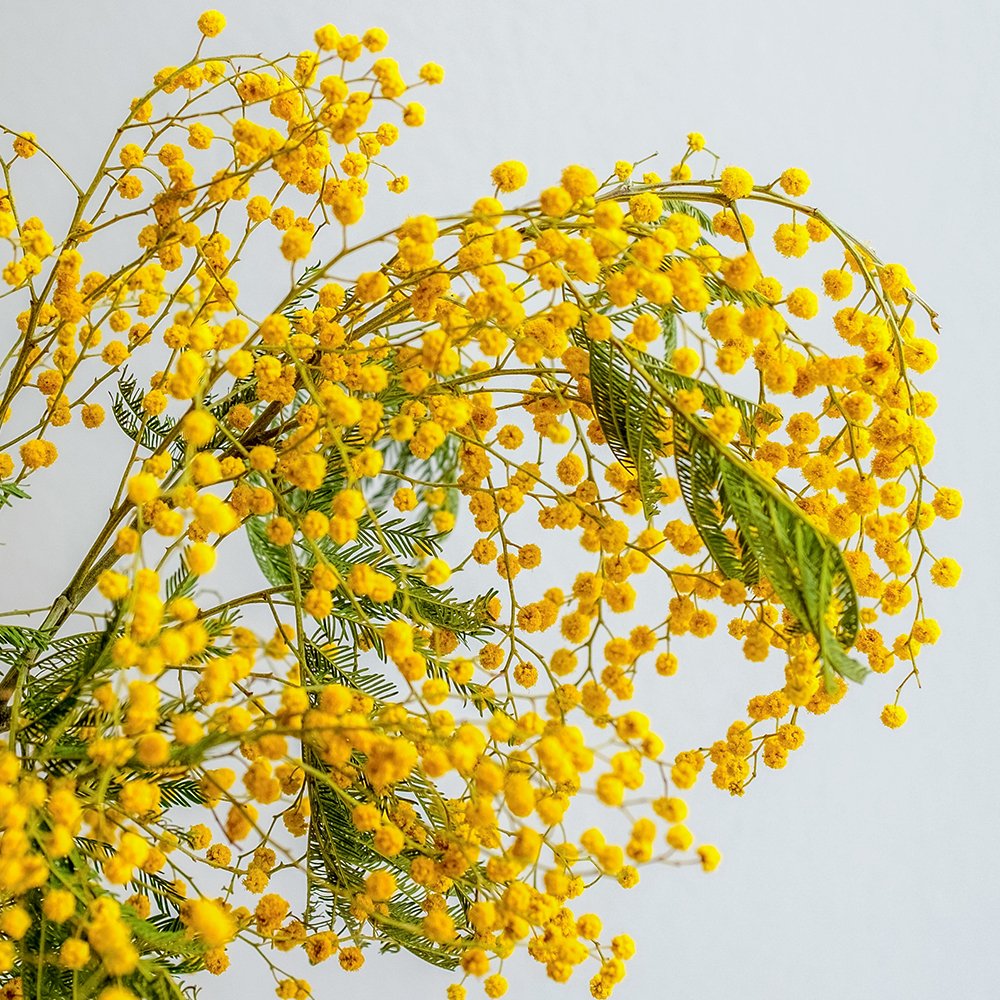
Flowers: Clustered in spherical, intensely fragrant, bright golden-yellow inflorescences
Blooming period: Late winter to early spring (January-March in Northern Hemisphere)
Harvesting: Flowers and flowering branch tips are harvested manually at peak bloom. Traditional harvest methods involve cutting flowering branches, which may include small portions of twig and leaf material that contribute to the final extract's olfactory profile.
Cultivation considerations:
Prefers temperate Mediterranean climate with mild, wet winters
Frost-sensitive (as evidenced by 1956 French crop loss)
Fast-growing but relatively short-lived (20-30 years typical cultivation cycle)
Requires well-drained soil; drought-tolerant once established
Ecological Context
In its native Australia, Acacia dealbata serves ecological functions including:
Nitrogen fixation through root-associated bacteria (typical of Fabaceae)
Pioneer species in disturbed habitats
Food source for native pollinators and wildlife
In naturalized regions (particularly Mediterranean Europe), the species can exhibit invasive characteristics, competing with native vegetation. This ecological tension contrasts with its economic value in perfumery cultivation.
Production Methods
Extraction Process Overview
Mimosa concrete and absolute production follows the classical solvent extraction methodology for delicate floral materials:
Step 1: Raw Material Preparation
Harvesting:
Manual harvesting of flowering branches at peak bloom (late winter/early spring)
Harvest includes flower clusters (pompons) plus small amounts of twig and foliage
Material processed fresh or lightly wilted (not dried)
Average harvest rate: ~60 kg fresh material per hour per worker
Optional pre-treatment:
For green or semi-bloomed mimosa: Forced blooming in warm, humid greenhouse conditions
This increases aromatic compound concentration in flowers
Step 2: Solvent Extraction (Concrete Production)
Process:
Fresh plant material loaded into extraction vessel
Immersion in non-polar solvent (traditionally petroleum ether; modern practice uses hexane)
Extraction period: Several hours with occasional agitation
May involve multiple extraction cycles for maximum yield
Solvents used:
Petroleum ether (traditional): Light petroleum fractions, bp 40-60°C
Hexane (modern standard): n-Hexane or mixed hexanes, bp ~69°C
Other: Occasionally benzene (historical, now avoided), cyclohexane
Yield: Approximately 0.1-0.75% concrete based on fresh plant material weight
Solvent recovery:
Filtration of extraction solution to remove plant debris
Gentle evaporation under vacuum at low temperature (typically <40-50°C)
Recovery and recycling of solvent
Residual solid/waxy material is the concrete
Step 3: Absolute Production (Alcohol Extraction)
Process:
Concrete warmed gently to soften (if needed)
Dissolution in ethanol (typically 95-96% ethanol)
Mixture stirred/agitated to ensure complete dissolution of aromatic components
Cooling to induce precipitation of waxes and non-aromatic lipids
Filtration or decantation to remove precipitated waxes
Ethanol evaporation under vacuum at low temperature
Residual liquid is the absolute
Yield: Approximately 20-25% absolute from concrete (Arctander, 1960)
Quality factors:
Purity of absolute depends on thoroughness of wax removal
Multiple alcohol extractions may be performed for highest-quality product
Color and viscosity indicate quality and degree of dewaxing
Alternative and Modern Extraction Methods
Supercritical CO₂ extraction:
Emerging method for mimosa and other floral extracts
Advantages: No solvent residues, lower processing temperature, selective extraction
Status: Experimental/small-scale; not yet standard for mimosa
Ultrasonic-assisted extraction:
Experimental method reported for mimosa
Uses ultrasound to enhance extraction efficiency
Limited commercial application
Molecular distillation:
May be applied to absolute for further refinement
Removes color and remaining heavy compounds
Produces ultra-refined product with modified profile
Quality Control and Standardization
Analytical methods:
Gas chromatography-mass spectrometry (GC-MS) for volatile profile characterization
Determination of key marker compounds (phenylethyl alcohol, methyl anisate, etc.)
Wax content determination (for concrete)
Organoleptic evaluation by perfumers
Quality parameters:
Appearance (color, consistency)
Odor profile (intensity, character, absence of off-notes)
Chemical composition (key constituent percentages)
Solubility (absolute should be completely alcohol-soluble)
Absence of adulterants
Common adulterations/quality issues:
Dilution with cheaper materials (synthetic mimosa bases, cassie absolute)
Excessive wax content in absolute (inadequate dewaxing)
Oxidized or aged material (off-notes, darkened color)
Synthetic mimosa reconstitutions sold as "natural"
Geographic Production Characteristics
French production (Grasse region):
Highest quality reputation
Small-scale, artisanal processing
Premium pricing
Limited annual production
Moroccan production:
Largest volume producer currently
Commercial-scale processing
Variable quality depending on producer
More economical pricing than French origin
References
Arctander, S. (1960). Perfume and flavor materials of natural origin. Elizabeth, NJ: Arctander.
European Commission. (2009). Regulation (EC) No 1223/2009 of the European Parliament and of the Council of 30 November 2009 on cosmetic products. Official Journal of the European Union.
International Fragrance Association. (2023). IFRA Standards—51st Amendment. Retrieved from https://ifrafragrance.org/standards-library
Sell, C. S. (2006). The chemistry of fragrances: From perfumer to consumer (2nd ed.). Cambridge: Royal Society of Chemistry.
Toulemonde, B., & Nusslein, B. (2010). Chemical composition of French mimosa absolute oil. Flavour and Fragrance Journal, 25(2), 68-74. https://doi.org/10.1002/ffj.1965