Image 1 of 2
 Image 2 of 2
Technical Ingredient Overview
🏭 Manufacturer — Bedoukian Research Inc.
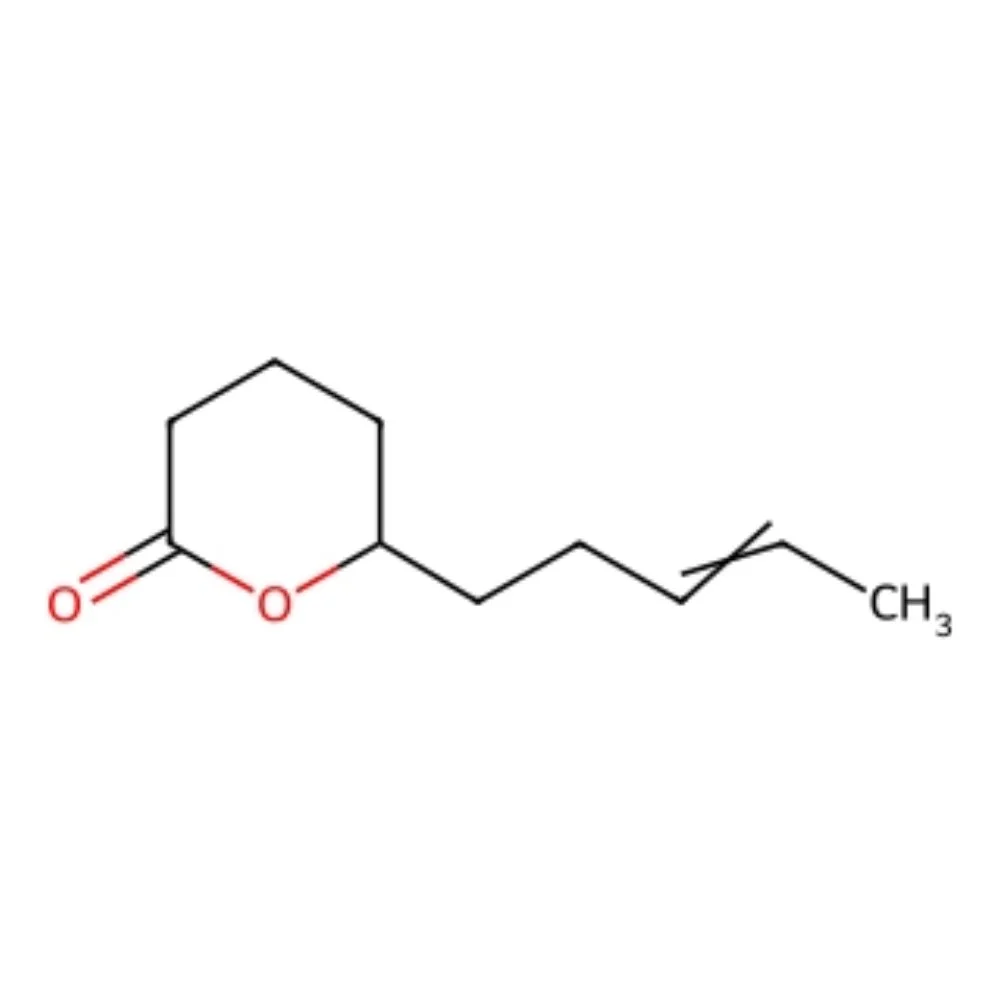
🔎 Chemical Name — 5-Octyloxolan-2-one
🧪 Synonyms — γ-Dodecalactone; γ-Dodecanolactone; γ-Laurolactone; 4-Dodecanolide; 5-Octyldihydro-2(3H)-furanone; Dodecanoic acid 4-hydroxy-, γ-lactone
🧬 Chemical Formula — C₁₂H₂₂O₂
📂 CAS — 2305-05-7
📘 FEMA — 2400 (FEMA, 1998)
⚖️ Molecular Weight — 198.30 g mol⁻¹
📝 Odor Type — Fruity peach-cream
📈 Odor Strength — Medium diffusion
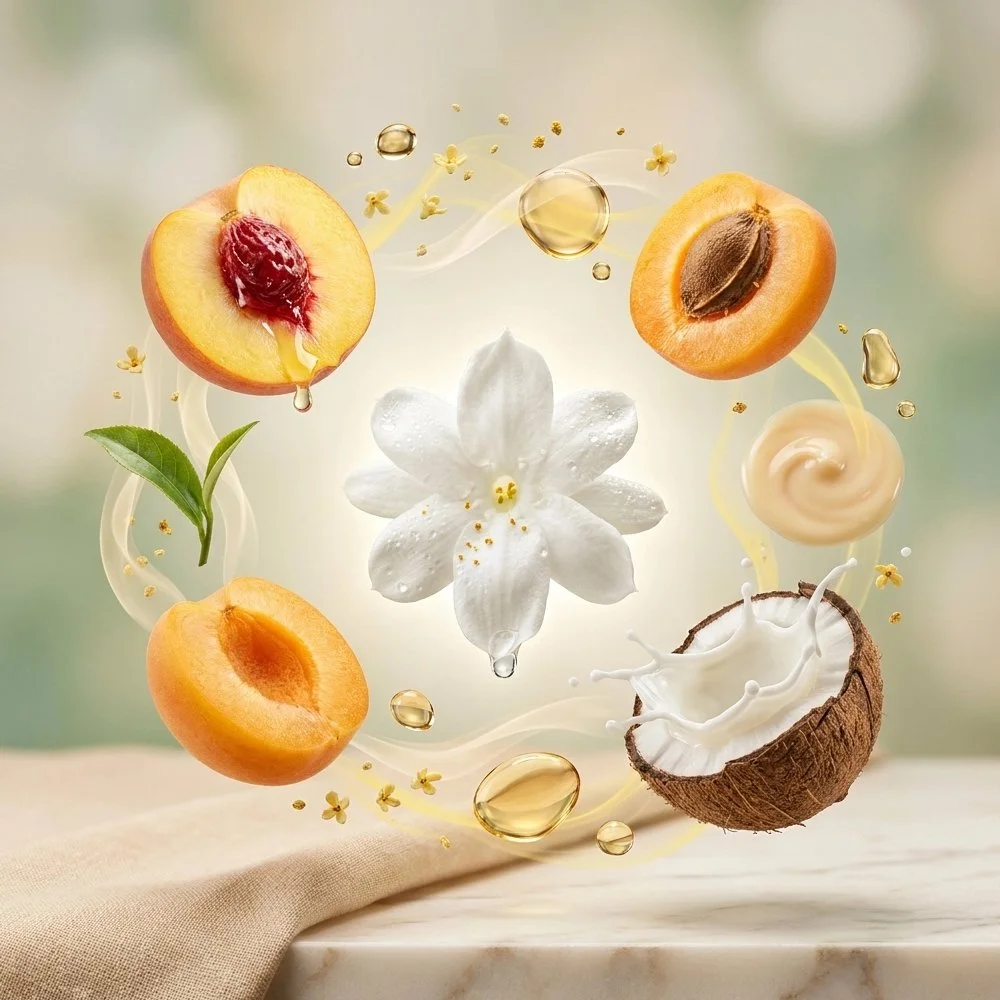
👃🏼 Odor Profile — Sweet peach–apricot, creamy, waxy-fatty, soft green rind nuance
⚗️ Uses — Peach & tropical accords, creamy florals, gourmand “milk/skin” effects, flavour enhancer for stone-fruit and dairy profiles
🧴 Appearance — Colourless to pale-yellow oily liquid
What is Gamma-Dodecalactone?
Gamma-Dodecalactone (γ-dodecalactone) is a 12-carbon γ-lactone with a five-membered cyclic ester and an n-octyl side chain. This ring size shifts its odour from the coconut-like freshness of δ-lactones toward a richer, waxy-creamy peach character (Arctander, 1969).
Naturally, it occurs at trace levels in:
ripe stone fruits such as peach and nectarine (Pino et al., 2005),
tropical fruits like mango (Mangifera indica) and guava (Good Scents Company, n.d.),
strawberries, butter, and milk (Keeney & Patton, 1956).
Commercial production relies on hydrogenation of ricinoleic acid (castor oil), oxidation, and lactonisation (ChemicalBook, n.d.). Modern white-biotech methods using Yarrowia lipolytica achieve high-efficiency biosynthesis (IFF Patent EP0578388, 1994).
With its C-12 chain, γ-dodecalactone bridges juicy top notes and persistent musky bases in perfumery (Arctander, 1969).
Historical Background
1930s–1950s – Medium-chain γ-lactones linked to the “coconut” off-flavour of dairy fat (Keeney & Patton, 1956).
1958 – Lever Brothers patented γ-lactones for margarine flavouring (US Patent 2819169 A).
1969 – Arctander highlighted its “extraordinary tenacity” in heavy florals
1980s – First microbial bioconversion to natural γ-lactones (US Patent 4560656 A).
1994 – IFF scaled Yarrowia fermentation (EP0578388).
1998 – FEMA GRAS reaffirmed; JECFA issued full specification (JECFA, 1998).
2020s – IFRA Transparency List confirms no restrictions (IFRA, 2022).
Olfactory Profile & Perfumery Applications
Descriptors: Peach flesh, apricot nectar, creamy-fatty wax, soft green (Arctander, 1969).
Volatility: Base-to-heart; boiling point ≈ 257 °C (JECFA, 1998).
Typical uses:
Peach, apricot & tropical accords (0.05–0.5 %) to heighten realism.
Creamy florals (0.01–0.2 %) for lactonic body.
Gourmand/dairy accords (0.1–1 %) for warm-milk nuances with heliotropin or vanillin.
Aldehydic powders & musks (trace–0.1 %) to soften sharp aldehydes.
Explore related ingredients: γ-Decalactone, δ-Dodecalactone, Ionone Alpha, Heliotropin, Coumarin.
Industrial & Technical Uses
Flavour additive in dairy, beverages and fruit preparations (FEMA 2400; JECFA, 1998).
Cosmetic fragrance component imparting soft “clean-skin” nuances.
Research substrate for lactone biosynthesis studies.
Regulatory & Safety Overview
IFRA 51st Amendment: Not restricted (IFRA, 2022).
EU Cosmetics Regulation 1223/2009: No allergen labelling required.
FEMA Status: FEMA 2400 (JECFA, 1998).
GHS Classification: Skin Irrit. 2; Eye Irrit. 2A; STOT SE 3 (ChemicalBook, n.d.).
REACH: Registered, EC 218-971-6 (1–10 t/y).
Transport: Not regulated as hazardous (IMDG/IATA/DOT).
References
Arctander, S. (1969). Perfume and Flavor Chemicals (Vols. I–II). Author.
ChemicalBook. (n.d.). 4-Dodecanolide (CAS 2305-05-7) — Chemical properties.
Cheméo. (n.d.). γ-Dodecalactone — Chemical data.
FEMA. (1998). Flavor Ingredient Library — 2400.
Good Scents Company. (n.d.). γ-Dodecalactone profile.
IFRA. (2022). Transparency List — γ-Dodecalactone.
International Flavors & Fragrances. (1994). Patent EP0578388.
JECFA. (1998). Evaluation of Flavouring Substances — γ-Dodecalactone.
Keeney, P. G., & Patton, S. (1956). The coconut-like flavour defect of milk fat. Journal of Dairy Science, 39, 1104–1113.
Pino, J. A., Mesa, J., Muñoz, Y., Martí, M. P., & Marbot, R. (2005). Volatile components from mango (Mangifera indica L.) cultivars. Journal of Agricultural and Food Chemistry, 53(6), 2213–2223.
United States Patent US 2819169 A (1958). Process of Flavouring Margarine.