 Image 1 of 2
 Image 2 of 2
Clary Sage Absolute
Clary Sage Absolute – Technical Ingredient Overview
🏭 Manufacturer — IFF LMR Naturals (Grasse, France), grade "Sauge Sclarée Absolue Pays"
🔎 Chemical Name — Salvia sclarea L. absolute (Salvia Sclarea Extract)
🧪 Synonyms — Clary sage absolute, Muscatel sage absolute, Clary sage, ext.; FDA mainterm "Clary sage, absolute"
📂 CAS Number — 8016-63-5 (TSCA); 84775-83-7 (EINECS listing); 8022-75-1 (FDA mainterm)
📘 FEMA Number — 3002
🔢 EC Number — 283-911-8
📝 Odor Type — Herbal
📈 Odor Strength — Medium (Luebke, 2021)
👃🏼 Odor Profile — Sweet-herbaceous, with cut hay, tea, lavender-floral and ambery tobacco-like nuances
⚗️ Uses — Fine fragrance (chypre, fougère and ambery compositions); flavor accords with tea and fruity tonalities
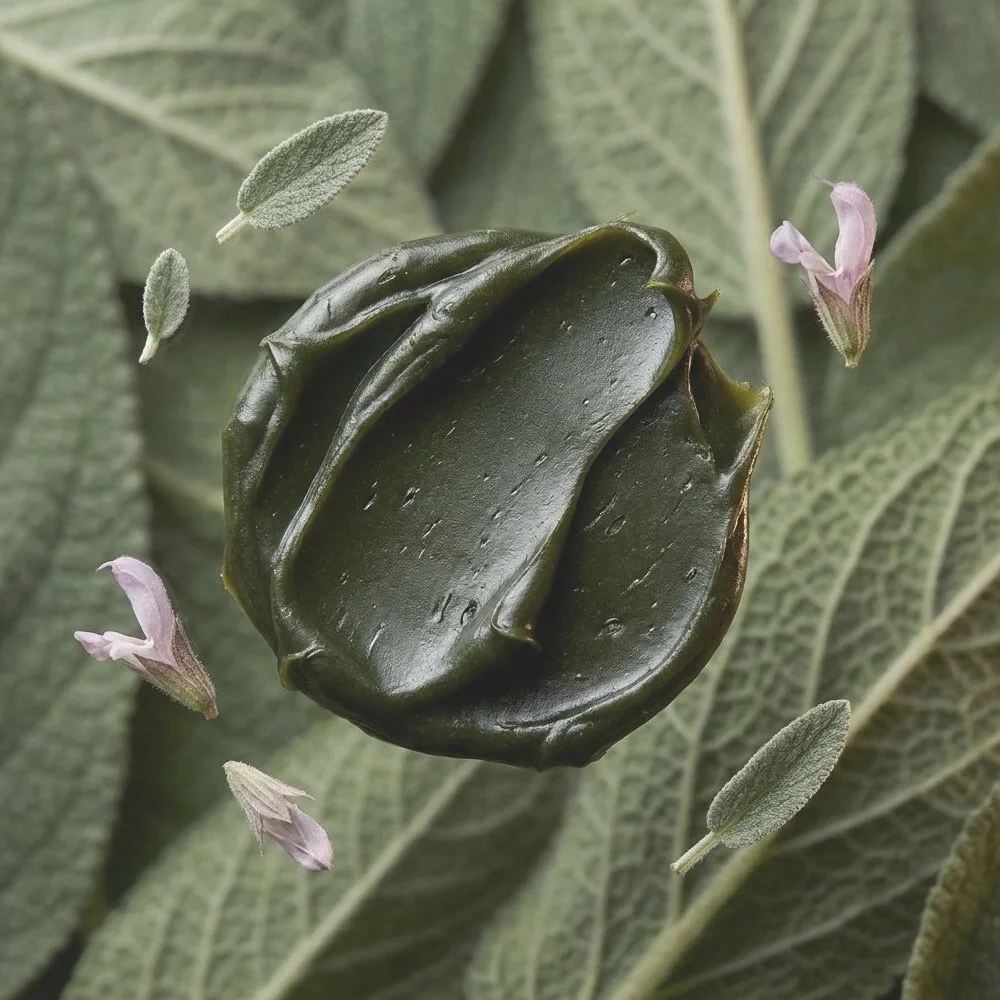
🧴 Appearance — Dark green fluid liquid; clary sage absolutes are also traded as brownish-green waxy solids that soften with gentle warming (Robertet, n.d.)
💧 Solubility — Soluble in ethanol; insoluble in water (IFF, 2024)
Perfumer's Note
Fulvio Ciccolo, perfumer at Scentspiracy, finds in this absolute a very deep clary sage note, with a sweet, long-lived linalool character that persists well into the dry-down. Two practical points from his evaluation: the material is dark green and can tint pale bases and finished products, and it performs best in small doses — his advice is to use it sparingly rather than push the dosage.
What is Clary Sage Absolute?
Clary sage absolute is a natural perfumery material obtained from the flowering tops and stems of Salvia sclarea L., a member of the Lamiaceae family. Production follows the classic two-step route of absolutes: a primary extraction of the fresh or dried biomass with a volatile solvent yields the concrete, and a second purification step gives the absolute (dsm-firmenich, n.d.). Its odor is shaped by the plant's signature chemistry — linalyl acetate and linalool, accompanied by the diterpene sclareol (Robertet, n.d). The grade supplied here is exceptionally rich in sclareol, which accounts for about 81% of the material, alongside roughly 10% linalyl acetate and 2% linalool (IFF, 2023a).
Historical Background
The plant is documented by the U.S. Food and Drug Administration under the synonyms "clary", "clary sage" and "muscatel sage", and its extracts have a long history of food use: clary sage absolute is listed among the natural extractives generally recognized as safe under 21 CFR § 182.20 (U.S. FDA, n.d). In the modern era, Salvia sclarea acquired industrial importance far beyond its direct aromatic value: cultivated on a large scale in the United States, China and Ukraine, the plant is processed into a concrete that serves as the raw material for isolating sclareol, the starting point of hemisynthetic derivatives with an ambery odor.
Olfactory Profile
Scent Family: Aromatic-herbaceous, with ambery and tobacco facets
Main Descriptors: Green, sweet, floral and spicy, with a distinct hay and tea-like nuance (Mosciano, 1991); herbal and lavender notes with a soapy facet (Luebke, 2021); ambery-musky and sweet-herbaceous, with accents of cut hay and tea (Robertet, n.d.); a warm amber note with floral-lavender and a long-lasting honey-tobacco character (IFF).
Intensity: Medium odor strength (Luebke, 2021).
Tenacity: Measured substantivity of 493 hours at 100% concentration on the smelling strip.
Volatility: Heart note with a base-like dry-down: the fresh linalyl acetate–linalool signature opens the material, while the heavy sclareol fraction anchors its long persistence.
Applications in Fine Fragrance
Absolute and essence of clary sage are both classic components of chypre, fougère and ambery fragrances (dsm-firmenich, n.d.).
Chypre & fougère accords — Bridges the lavender top with coumarinic and woody bases, adding body, sweetness and an authentic herbaceous tone.
Ambery & tobacco accords — The honey-tobacco dry-down reinforces labdanum, tobacco and woody-ambery constructions.
Herbal, green & tea accords — Contributes cut-hay and tea nuances and a distinct herbal freshness to green accords and lavender bases.
Performance in Formula
Fixative Power — Described as a good fixative, with a heavy, low-volatility fraction that supports the composition's base.
Radiance Effect — Brings a bright yet earthy aromatic lift, with a subtle fruity undertone (dsm-firmenich, n.d.)
Stability — Stable under recommended handling and storage conditions; keep away from heat, strong acids, oxidising agents and alkalis (IFF, 2024)
Compatibility — Pairs naturally with lavender and lavandin materials, coumarinic notes (tonka, hay), tobacco and woody-ambery bases
Industrial & Technical Uses
Flavor Industry — GRAS for food use (FEMA 3002; 21 CFR § 182.20); employed in flavor creation for fruity notes and tea tonalities (Firmenich)
Cosmetics — Used as a perfuming ingredient in cosmetic formulations
Regulatory & Safety Overview
IFRA Status: Contains no ingredient prohibited by the IFRA Code of Practice through the 51st Amendment; all components subject to an IFRA restriction standard (trans-2-hexenal, geraniol, citral, benzyl alcohol, benzyl benzoate, coumarin, eugenol, benzaldehyde) are present below 0.1% each (IFF, 2023b).
EU Cosmetics Regulation: Not listed among the substances prohibited or restricted by Regulation (EC) No 1223/2009. Declarable fragrance allergens of the extended EU list include sclareol (81.4%), linalyl acetate (10.0%) and linalool (2.0%), with geraniol, citral, coumarin and others below 0.1% each; labeling applies at 0.001% in leave-on and 0.01% in rinse-off products (IFF, 2023a).
EU REACH: Registered (no. 01-2120768762-43); not restricted under Annex XVII of Regulation (EC) No 1907/2006 (IFF, 2024).
FEMA Status: GRAS as a flavoring substance (FEMA 3002); listed under 21 CFR § 182.20 among essential oils, oleoresins and natural extractives generally recognized as safe (U.S. FDA, n.d.).
GHS Classification: GHS07 — Warning: Skin Sens. 1 (H317, may cause an allergic skin reaction), Eye Irrit. 2 (H319, causes serious eye irritation), Aquatic Chronic 3 (H412, harmful to aquatic life with long lasting effects). No physical hazard; flash point 95 °C (IFF, 2024).
Toxicology
Sensitization — Classified as a skin sensitiser (Category 1), driven by its linalyl acetate, linalool, beta-pinene and beta-caryophyllene content (IFF, 2024)
General — Eye irritation is fully reversible within 21 days of observation; the substance does not fulfil PBT or vPvP criteria (IFF, 2024)
Frequently Asked Questions
What does clary sage absolute smell like?
Sweet and herbaceous, dominated by cut hay and tea-like nuances over a lavender-floral heart, with a warm ambery and honey-tobacco dry-down (Mosciano, 1991; Robertet, n.d.).
Is clary sage absolute the same as clary sage essential oil?
No. The essential oil is obtained by steam distillation of the flowering stems of Salvia sclarea (European Commission, 2025), while the absolute is produced by volatile-solvent extraction of the biomass to a concrete, followed by ethanolic purification (dsm-firmenich, n.d.). The absolute is a denser, sweeter solid material, richer in hay, tea and tobacco facets and in non-volatile constituents such as sclareol.
What is clary sage absolute used for in perfumery?
It is a classic component of chypre, fougère and ambery compositions, where it bridges lavender and woody-coumarinic bases and acts as a fixative (dsm-firmenich, n.d.).
Is clary sage absolute soluble in alcohol?
Yes, it is soluble in ethanol and practically insoluble in water.
How is clary sage absolute made?
By two-step solvent extraction: a volatile-solvent extraction of fresh or dried clary sage biomass produces the concrete, and a second purification step in ethanol yields the absolute (dsm-firmenich, n.d.).
Related Ingredients on Scentspiracy
Linalyl Acetate — the ester that signs the fresh, lavender-bergamot top of clary sage
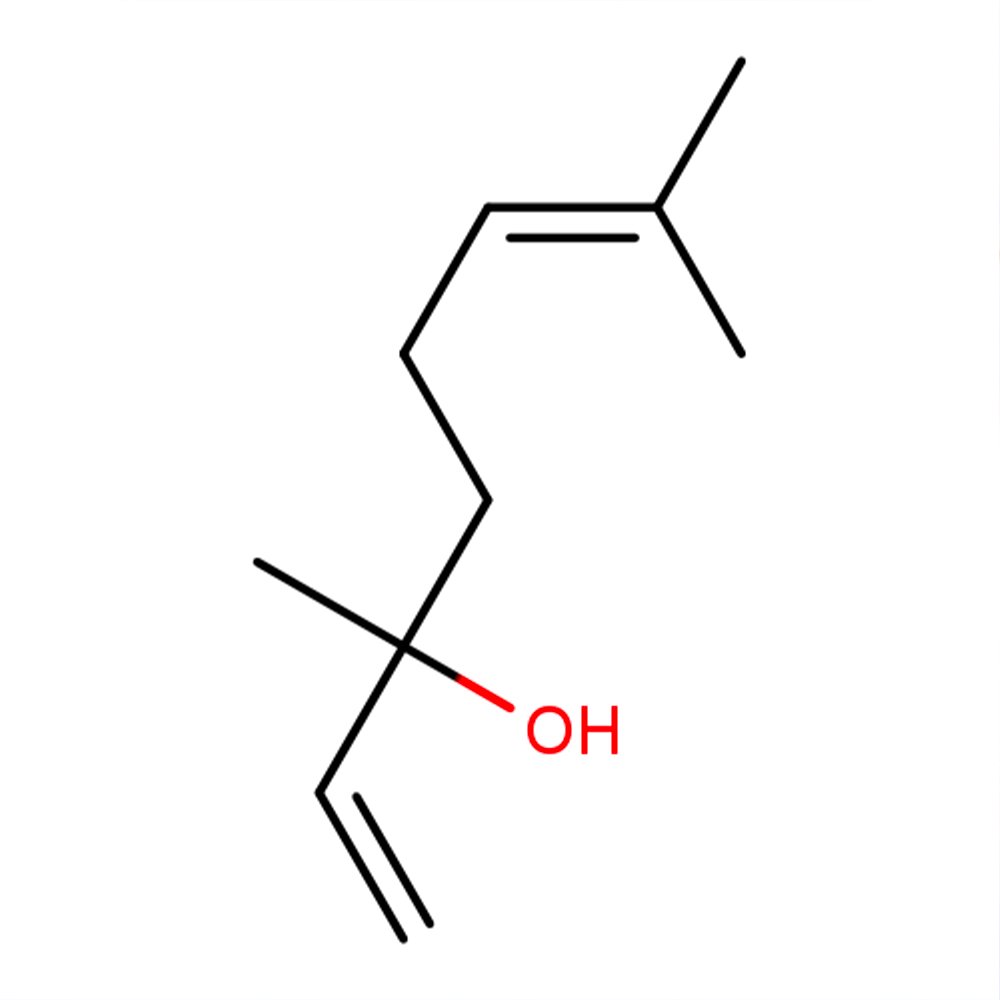
Linalool — the floral-fresh alcohol behind its lavender facet
Lavender Absolute France — the classic fougère partner; its herbal sweetness amplifies the accord
Tobacco Absolute — reinforces the hay, tea and honey-tobacco dry-down
Ambrox® Super — the ambery destination of the sclareol chemistry that begins in this plant
Technical profile written by Scentspiracy. Sources are listed below. Last updated: October 2026.
References
dsm-firmenich. (n.d.). Clary Sage Abs (981593) [Product page]. https://studio.dsm-firmenich.com/product/clary-sage-abs-pe-981593
European Commission. (2025). Commission Implementing Regulation (EU) 2025/1400. EUR-Lex. https://eur-lex.europa.eu/eli/reg_impl/2025/1400/oj
IFF. (2023a). EU extended fragrance allergens: Sauge Sclarée Absolue Pays (H19108) [Allergen declaration].
IFF. (2023b). IFRA 51 ingredients: Sauge Sclarée Absolue Pays (H19108) [IFRA conformity statement].
IFF. (2024). Safety data sheet: Sauge Sclarée Absolue 191196 (France) (Version 5.1) [SDS].
Mosciano, G. (1991). Clary sage absolute [Organoleptic evaluation]. Perfumer & Flavorist, 16(2), 49.
Robertet. (n.d.). Clary sage absolute [Product page]. https://www.e-robertet.com/en/clary-sage-absolute-france-russia.html
The Good Scents Company. (n.d.). Clary sage absolute, 8016-63-5 [Data sheet]. https://www.thegoodscentscompany.com/data/ab1041391.html
U.S. Food and Drug Administration. (n.d.). Clary (Salvia sclarea L.). In Substances added to food inventory (formerly EAFUS). https://hfpappexternal.fda.gov/scripts/fdcc/index.cfm?id=CLARY&set=FoodSubstances