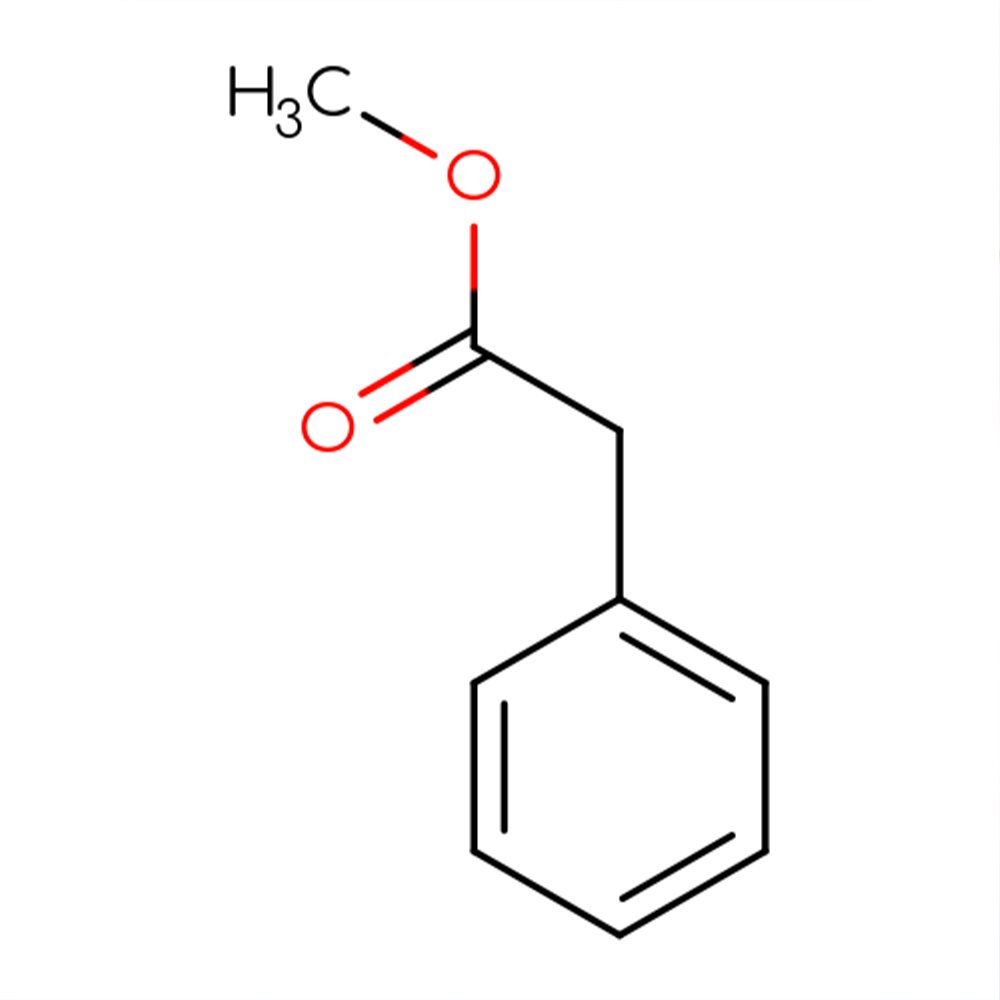
Image 1 of 2
 Image 2 of 2
Phenylethyl Acetate - Technical Ingredient Overview
🏭 Manufacturer — Various (Produced synthetically by multiple manufacturers)
🔎 Chemical Name — 2-Phenylethyl acetate; Acetic acid 2-phenylethyl ester
🧪 Synonyms — Phenethyl acetate, β-Phenylethyl acetate, Benzylcarbinyl acetate, β-Phenethyl acetate, 2-Phenethyl acetate, Phenylethanol acetate
📂 CAS Number — 103-45-7
📘 FEMA Number — 2857 (GRAS approved for food use)
⚖️ Molecular Weight — 164.20 g/mol
📝 Odor Type — Floral-Fruity
📈 Odor Strength — Moderate to Strong
👃🏼 Odor Profile — Sweet and round rose character with distinct honey notes, peachy-fruity nuances, and subtle green undertones. Secondary notes include cacao and balsamic facets at higher concentrations
⚗️ Uses — Perfumery modifier, flavor ingredient, functional fragrance applications
🧴 Appearance — Colorless to pale yellow liquid
What is Phenylethyl Acetate?
Phenylethyl acetate is a synthetic aromatic ester formed through the esterification of phenylethyl alcohol (2-phenylethanol) with acetic acid or acetic anhydride. This reaction is typically catalyzed by small amounts of concentrated sulfuric acid, though improved yields can be achieved using acetic anhydride or chloroacetic acid (Surburg & Panten, 2006).
While it occurs naturally in trace amounts in various fruits, essential oils, and fermented products—including rose flowers, pineapple, grape, cocoa beans, wine, and brandy—commercial production relies entirely on chemical synthesis due to its efficiency and the high demand for this ingredient in both perfumery and food flavoring industries (McGinty et al., 2012). The worldwide consumption exceeds 100 metric tons annually, making it one of the important volume fragrance chemicals.
Structurally, phenylethyl acetate belongs to the phenethyl ester family and shares olfactive similarities with its precursor, phenylethyl alcohol, but presents a notably sweeter, more honeyed, and fruitier profile that has made it indispensable in modern perfumery.
Historical Background
The historical development of phenylethyl acetate follows the broader evolution of synthetic fragrance chemistry in the late 19th and early 20th centuries. As perfumers sought to recreate and enhance natural rose notes, the esterification of phenylethyl alcohol—itself derived from rose oil or synthesized via Friedel-Crafts reaction of benzene with ethylene oxide—became an important technique.
Though specific dates and researchers for its first synthesis are not definitively documented in available literature, phenylethyl acetate emerged alongside other phenethyl esters during the industrial expansion of aroma chemicals in the early 1900s. The material gained recognition as perfumers discovered that the acetylation of phenylethyl alcohol produced a rounder, more diffusive rose character with enhanced honey and fruity facets—qualities that could not be achieved with the alcohol alone.
Arctander's comprehensive work "Perfume and Flavor Materials of Natural Origin" cemented phenylethyl acetate's importance in mid-20th-century perfumery, noting its widespread use from fine cosmetic fragrances to everyday soap perfumes (Arctander, 1960). The material became particularly valued as a modifier of phenylethyl alcohol in rose compositions, lilac bases, and various floral accords where its sweetness and tenacity provided balance and depth.
Olfactory Profile
Scent Family
Floral-Fruity
Phenylethyl acetate is classified as a floral-fruity aroma chemical, bridging the delicate rose character of its parent alcohol with enhanced fruity sweetness and honey notes.
Main Descriptors
Primary: Sweet, rosy-floral, honey-like
Secondary: Peach, apricot, fruity-tropical
Tertiary: Green undertones, cacao nuances, balsamic facets
Character: Round, soft, diffusive with natural-feeling radiance
The scent profile maintains the recognizable rose notes of phenylethyl alcohol while introducing a more pronounced honey character perfect for enhancing fruit and floral compositions. Refined grades exhibit soft balsamic depth, and at higher concentrations, warm cacao and yeasty-fermentative undertones emerge, creating a comforting, gourmand quality (Surburg & Panten, 2006).
Intensity
Moderate to strong odor strength with considerable tenacity in perfume bases. The material possesses penetrating power that can significantly alter the overall performance and character of a fragrance composition even at fractional percentages.
Tenacity
Good persistence with moderate-to-long-lasting qualities. Exhibits better substantivity than its parent alcohol, making it valuable in applications requiring longevity, particularly in functional perfumery for soaps, detergents, and fabric care products.
Volatility
Middle to base note
Phenylethyl acetate evaporates more slowly than phenylethyl alcohol due to its higher molecular weight (164.20 g/mol vs. 122.16 g/mol), positioning it firmly in the middle-to-base note range. This slower evaporation contributes to its value as a fixative component in floral compositions, where it helps bridge the gap between volatile top notes and heavier base materials.
Fixative Role
Functions as a soft fixative in floral accords, particularly in rose, gardenia, lilac, and hyacinth compositions. Its ability to round off harsh synthetic notes while lifting natural materials makes it an invaluable blending agent. Phenylethyl acetate enhances radiance in perfume bases and provides natural-feeling depth without overwhelming delicate floral nuances.
Applications in Fine Fragrance
Phenylethyl acetate serves as a versatile modifier and enhancement agent across numerous fragrance families. Its primary application remains in floral compositions, where it is used extensively in rose, lilac, hyacinth, peony, gardenia, and muguet (lily-of-the-valley) bases. The material softens and sweetens phenylethyl alcohol while adding fruity-peachy facets that bring naturalistic roundness to reconstituted flower notes.
In floral-fruity and gourmand fragrances, phenylethyl acetate contributes honey-like sweetness and tropical fruit nuances, often paired with materials like coumarin, heliotropine, vanillin, and various ionones. It blends particularly well with citronellol, geraniol, and nerol in rose accords, creating depth and complexity.
The material also finds use in oriental and ambery compositions, where its balsamic undertones complement benzoin, styrax, and vanilla notes. Its affinity for green-floral notes makes it valuable in chypre and fougère structures, particularly when combined with oakmoss, lavender, and geranium.
Performance in Formula
Phenylethyl acetate demonstrates excellent blending behavior with both natural and synthetic materials. It harmonizes seamlessly with other rose components (citronellol, geraniol, damascones, rose oxides) while also pairing effectively with heavier florals such as ylang-ylang, tuberose, jasmine, and narcissus.
The material exhibits good stability in alcoholic solutions and maintains its character across a wide pH range, making it suitable for various applications including soap, where alkali resistance is essential. In functional perfumery, phenylethyl acetate provides lasting freshness and floral character that survives wash cycles, contributing to its popularity in laundry products.
Industrial & Technical Uses
Beyond fine fragrance, phenylethyl acetate serves multiple functions across industries. As FEMA 2857, it is approved for direct addition to food as a flavoring agent, contributing sweet floral-honey notes to vanilla, fruit, caramel, butter, rose, and tropical flavor profiles. Its natural occurrence in fruits and fermented beverages supports its use in authentic flavor replication.
In functional perfumery, the material appears in soaps, detergents, fabric softeners, room sprays, air fresheners, shampoos, and cosmetic products. Its substantivity on fabrics and pleasant character at low cost make it economically attractive for large-volume applications.
Phenylethyl acetate also serves as a pharmaceutical intermediate and finds analytical applications in gas and liquid chromatography as a reference standard.
Regulatory & Safety Overview
IFRA Status
Permitted — No restrictions under IFRA Standards Amendment 51 (notified June 30, 2023). Phenylethyl acetate may be used according to standard Good Manufacturing Practices across all 12 product categories. No specific concentration limits apply. IFRA Standards Library
EU Cosmetics Regulation
Phenylethyl acetate is not listed among the 26 mandatory declarable allergens under EU Cosmetics Regulation (EC) No 1223/2009. It is registered under REACH and is not classified as hazardous, allowing broad use in cosmetic and personal care applications throughout the European Union.
FEMA Status
FEMA 2857 — Approved as Generally Recognized As Safe (GRAS) for food flavoring use under specific concentration limits as outlined in 21 CFR 172.515. FEMA GRAS Database
Toxicology
Phenylethyl acetate demonstrates a generally favorable safety profile. Toxicological evaluation indicates moderate toxicity by ingestion and mild toxicity by skin contact, with some potential for skin irritation at high concentrations. The material is combustible when exposed to heat or flame and can react with oxidizing materials. Studies show no significant genotoxic or carcinogenic concerns at concentrations used in fragrance and flavor applications (McGinty et al., 2012). Standard safety precautions for handling fragrance materials apply, including proper ventilation and personal protective equipment during formulation.
References
Arctander, S. (1960). Perfume and flavor materials of natural origin. Self-published.
McGinty, D., Letizia, C. S., & Api, A. M. (2012). Fragrance material review on phenethyl acetate. Food and Chemical Toxicology, 50(Suppl. 2), S491–S497. https://doi.org/10.1016/j.fct.2012.02.092
Surburg, H., & Panten, J. (2006). Common fragrance and flavor materials: Preparation, properties and uses (5th ed.). Wiley-VCH. https://doi.org/10.1002/3527608214
International Fragrance Association. (2023). IFRA Standards – 51st Amendment. https://ifrafragrance.org/safe-use/library
Flavor and Extract Manufacturers Association. (2024). FEMA GRAS Database (No. 2857). https://www.femaflavor.org/
PubChem [Internet]. Bethesda (MD): National Library of Medicine (US), National Center for Biotechnology Information; 2004-. PubChem Compound Summary for CID 7654, 2-Phenylethyl Acetate. https://pubchem.ncbi.nlm.nih.gov/compound/Phenethyl-acetate