Image 1 of 2
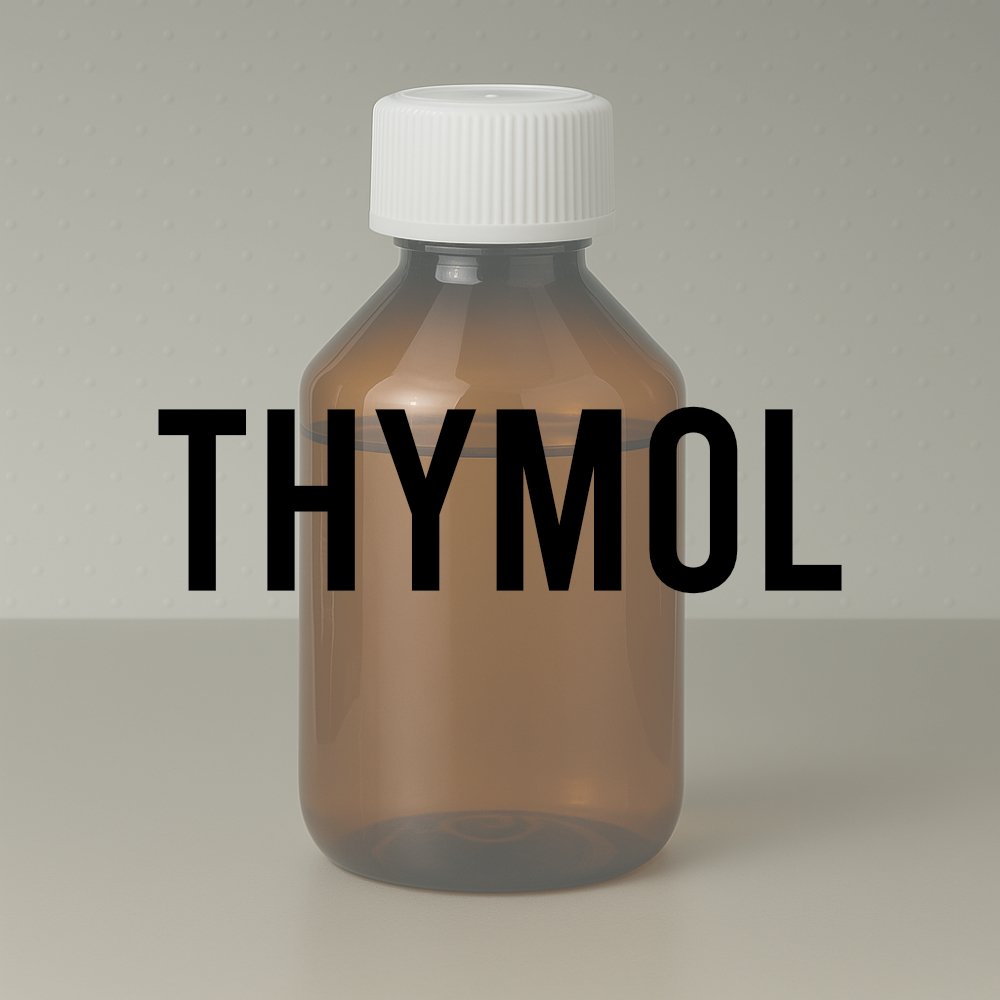 Image 2 of 2
Thymol Technical Ingredient Overview
🏭 Manufacturer — Industrial synthesis via multiple routes (Haarmann & Reimer process from m-cresol, dehydrogenation of piperitone, oxidation of p-cymene)
🔎 Chemical Name — 2-Isopropyl-5-methylphenol
🧪 Synonyms — 5-Methyl-2-isopropylphenol; 5-Methyl-2-(1-methylethyl)phenol; IPMP; Thymolum; 3-Methyl-6-isopropylphenol; 2-Hydroxy-1-isopropyl-4-methylbenzene
📂 CAS Number — 89-83-8
📘 FEMA Number — 3066
⚖️ Molecular Weight — 150.22 g/mol
📝 Odor Type — Phenolic-herbaceous
📈 Odor Strength — High (substantial persistence, 176+ hours on strip at 10% dilution)
👃🏼 Odor Profile — Spicy-herbaceous, phenolic, thyme-like with camphoraceous, medicinal, and warm aromatic facets. At lower dilutions, reveals sweet-medicinal character with less aggressive phenolic notes compared to phenol or cresol
⚗️ Uses — Fine fragrance (fougère, herbal-citrus, aromatic accords), functional perfumery (oral care, antiseptic products), flavor applications (oral hygiene, cough preparations, savory seasonings), pharmaceutical formulations, beekeeping (antimicrobial agent)
🧴 Appearance — White to colorless crystalline solid or large translucent crystals; melting point 48-51°C
What is Thymol?
Thymol (2-isopropyl-5-methylphenol) is a naturally occurring phenolic monoterpenoid and the principal aromatic constituent of essential oils derived from Thymus vulgaris L. (common thyme), Thymus zygis, and related Lamiaceae family species (Arctander, 1960). As a monocyclic phenol, thymol is structurally characterized by an isopropyl group at the 2-position and a methyl group at the 5-position of the phenol ring, which differentiates it from its positional isomer carvacrol (2-methyl-5-isopropylphenol).
The compound exists as colorless to white crystals with a characteristic herbaceous-aromatic odor reminiscent of thyme, accompanied by a pungent, warming taste (Sell, 2006). Thymol demonstrates significant versatility across multiple industries, serving as both an olfactive ingredient in perfumery and flavors, and as a bioactive compound in pharmaceutical and agricultural applications due to its documented antimicrobial, antifungal, and antioxidant properties.
Historical Background
Thymol was first isolated and characterized in the mid-19th century from thyme essential oil, with early pharmaceutical applications documented in European and Middle Eastern traditional medicine systems (Arctander, 1960). The compound gained commercial significance following the development of synthetic production methods in the early 20th century, which enabled consistent supply independent of agricultural variations.
The most commercially significant synthetic route was developed by Haarmann & Reimer (now part of Symrise), utilizing a continuous high-temperature, high-pressure alkylation process of m-cresol with propylene in the presence of activated aluminum oxide hydrate catalyst (Sell, 2006). This industrial process produces crude thymol mixtures containing approximately 60% thymol, 25% unreacted m-cresol, and various isopropyl-substituted phenolic byproducts, which are subsequently purified through fractional distillation and recycling of byproducts.
Alternative synthetic pathways include:
Dehydrogenation of piperitone (producing both menthol and thymol)
Oxidation of p-cymene (a natural turpentine component)
Traditional extraction from ajowan oil (Trachyspermum ammi), practiced historically in India
The compound's role in perfumery evolved significantly during the 20th century, transitioning from a minor botanical ingredient to a valued synthetic material for herbaceous-aromatic compositions, particularly in fougère structures and functional fragrances.
Olfactory Profile
Scent Family
Thymol belongs to the phenolic-herbaceous family, classified as an aromatic-medicinal ingredient with camphoraceous undertones.
Main Descriptors
The olfactory character of thymol presents a complex profile that evolves significantly with concentration:
Primary facets: Spicy-herbaceous, distinctly thyme-like, phenolic, camphoraceous
Secondary facets: Warm-aromatic, medicinal, slightly sweet (at lower concentrations)
Tertiary facets: Dry, woody-balsamic undertones
Unlike harsher phenolic compounds such as phenol or cresols, thymol exhibits a cleaner, less aggressive character with distinctly herbal-floral nuances that render it more acceptable in aromatic compositions (Arctander, 1960). At dilutions below 1%, the medicinal-phenolic sharpness moderates considerably, revealing warmer, almost sweet-herbal characteristics particularly valuable in naturalistic fragrance work.
Intensity
Thymol demonstrates high olfactory impact with a pronounced intensity characteristic of phenolic compounds. The material exhibits strong diffusion properties and requires careful dosage in fragrance compositions, typically employed at concentrations ranging from trace amounts (< 0.1%) to approximately 2% depending on the desired aromatic effect.
Tenacity
Exceptional persistence characterizes thymol's performance, with documented longevity exceeding 176 hours on perfumer's strips at 10% dilution in ethanol. This substantial tenacity positions thymol as both a characterizing ingredient and a fixative component in certain aromatic-herbaceous accords.
Volatility
Thymol functions primarily in the top to heart note register despite its relatively high molecular weight (150.22 g/mol). The compound's volatility profile (boiling point 232°C at 101.3 kPa; vapor pressure 1 mmHg at 64°C) creates an interesting dichotomy: rapid initial diffusion providing immediate aromatic impact, followed by sustained presence throughout the fragrance development.
Fixative Role
While not classified as a traditional base-note fixative, thymol's high tenacity and phenolic structure contribute substantive holding power to compositions, particularly in:
Herbaceous-aromatic accords where it anchors volatile terpenes
Fougère structures providing bridge between volatile lavender and heavier oakmoss/coumarin bases
Functional fragrances where sustained antimicrobial efficacy correlates with olfactive persistence
Applications in Fine Fragrance
Thymol occupies a specialized position in contemporary perfumery, valued for its distinctive character and technical performance. The material finds primary application in:
Aromatic-Herbaceous Compositions
Thymol serves as an authentic botanical marker in naturalistic herbaceous accords, particularly those evoking Mediterranean garrigue, kitchen gardens, or aromatic spice blends. It pairs effectively with:
Lavender (creating herbaceous-medicinal fougère nuances)
Rosemary, sage, oregano natural oils (reinforcing authentic herbal character)
Eucalyptus, menthol, camphor (building camphoraceous-aromatic effects)
Fougère Structures
In modern fougère compositions, thymol contributes dry, herbaceous-spicy facets that complement classical lavender-coumarin-oakmoss frameworks. The material introduces medicinal-aromatic dimensions particularly valuable in masculine toiletries and contemporary aromatic-fresh fragrances.
Citrus-Herbal Blends
Thymol demonstrates excellent blending behavior with citrus ingredients, particularly:
Lime, mandarin essential oils (where thymol's natural occurrence in mandarin peel provides synergistic reinforcement)
Bergamot, petitgrain (creating aromatic-cologne effects)
Mint species (building fresh-aromatic-medicinal accords)
Functional-Aromatic Applications
The compound's clean-medicinal character makes it particularly valuable in functional perfumery for:
Antiseptic-aromatic room sprays and surface cleaners
Oral care product fragrances (where olfactive and antimicrobial properties align)
After-shave preparations and grooming products (providing clinical-fresh aromatic signatures)
Performance in Formula
Thymol exhibits predictable behavior in fragrance formulations, demonstrating good stability in alcoholic solutions and compatibility with most common perfumery ingredients. Key performance characteristics include:
Blending Behavior: The material integrates readily into compositions despite its high intensity, showing particular affinity for terpene alcohols (terpineol, menthol, borneol), aromatic aldehydes, and other phenolic ingredients. Thymol requires careful dosage to avoid overwhelming more delicate floral or fruity notes.
Modification Effects: When combined with softer materials, thymol can be effectively modulated:
Terpene alcohols (terpineol, menthol) soften phenolic sharpness
Resinoids (benzoin, Peru balsam) add warmth and roundness
Aldehydes (particularly aromatic aldehydes like anisaldehyde) create retro-medicinal effects
Stability Considerations: Thymol demonstrates excellent stability in finished formulations. However, as noted by Arctander (1960), the phenolic nature necessitates attention to metal contact, as iron traces can cause discoloration. In soap applications, higher concentrations may prevent use in white soap formulations due to potential color development.
Functional Synergies: Beyond olfactive performance, thymol's antimicrobial properties provide functional benefits in products requiring preservation or antiseptic activity, creating synergies with compounds such as chlorhexidine in oral care formulations.
Industrial & Technical Uses
Beyond perfumery applications, thymol serves multiple industrial and technical functions:
Flavor Industry
Thymol finds extensive use in flavor formulations, typically at concentrations of 2-100 ppm:
Oral hygiene products: Toothpaste, mouthwash, chewing gum (exploiting both flavor and antimicrobial properties)
Cough preparations: Lozenges, syrups, throat sprays
Savory seasonings: Particularly in imitation mandarin flavors (following identification of thymol in mandarin peel oil in 1963)
Herbal flavor complexes: Thyme, oregano, and Mediterranean herb reproductions
Pharmaceutical Applications
Preservative: Stabilizer in halothane anesthetics
Antimicrobial agent: Utilized for antiseptic and disinfectant properties in various pharmaceutical preparations
Topical treatments: Component in preparations for skin infections and oral health applications
Agricultural & Beekeeping Applications
Varroa mite control: Approved treatment for controlling Varroa destructor infestations in honeybee colonies
Natural pesticide: Employed in organic agriculture as a biodegradable antimicrobial and insecticidal agent
Hive hygiene: Prevents fermentation and mold growth in bee colonies
Biological Mechanism of Action
Thymol's antimicrobial efficacy operates through multiple mechanisms:
Disruption of bacterial cell membrane integrity
Inhibition of glucose uptake and lactate production in bacteria
Antifungal action via membrane disruption and hyphal damage
Synergistic enhancement of other antimicrobial compounds
Regulatory & Safety Overview
IFRA Status
Thymol is not subject to specific restrictions under the International Fragrance Association Standards through Amendment 51 (International Fragrance Association, 2023). The compound may be used in fragrance formulations at appropriate concentrations without quantitative limitations, though general good manufacturing practices and adequate safety assessment remain applicable.
IFRA Standards Library: https://ifrafragrance.org/standards-library
EU Cosmetics Regulation
Under EU Regulation (EC) No 1223/2009, thymol is not listed as a prohibited substance. While thymol may occur as a trace component in natural essential oils that appear on Annex III (substances subject to restrictions), pure synthetic or isolated thymol used as a fragrance ingredient is not specifically restricted beyond general safety assessment requirements.
FEMA Status
Thymol is approved as a flavoring substance under FEMA 3066 with GRAS (Generally Recognized As Safe) status for use in food applications when used in accordance with good manufacturing practices. The compound is also listed under:
JECFA: Meeting purity specifications
Council of Europe: Listed as compound 174
Flavis Number: 4.006
Toxicology
The safety profile of thymol has been extensively studied:
Acute Toxicity: Classified as Acute Toxicity Category 4 (Oral). Thymol demonstrates approximately 5-fold lower toxicity compared to phenol
Sensitization: Low dermal sensitization potential documented in repeated insult patch testing
Phototoxicity: No phototoxic effects observed in standard assessment protocols
Systemic Toxicity: Acceptable safety margins established for cosmetic and oral care use
Biodegradability: Readily biodegradable; does not accumulate in environmental systems
GABA Receptor Interaction: Acts as an allosteric modulator of human γ-aminobutyric acid (GABAA) receptors at higher concentrations
GHS Classification (according to CLP Regulation):
Eye Dam. 1 (Serious eye damage)
Skin Corr. 1B (Skin corrosion)
Aquatic Chronic 2 (Chronic aquatic toxicity)
Conclusion: Thymol is considered safe for use in perfumery, oral care products, and food flavoring applications when employed at recommended concentrations and in accordance with relevant regulatory frameworks. The compound's long history of safe use, combined with comprehensive toxicological assessment, supports its continued application across multiple product categories.
Natural Occurrence
Thymol occurs naturally as a major constituent in essential oils from multiple botanical sources, predominantly within the Lamiaceae family:
Primary Sources (High Thymol Content)
Thymus vulgaris L. (Common thyme): 37-55% thymol in essential oil
Thymus zygis L.: Major source for commercial "Spanish thyme oil"
Origanum compactum Benth.: 38-56% phenol content (predominantly thymol)
Trachyspermum ammi (L.) Sprague (Ajowan): Historical Indian source for thymol extraction
Secondary Sources (Moderate to Low Thymol Content)
Monarda fistulosa L. (Wild bergamot), M. didyma L.: Historically used by Native American groups
Origanum vulgare L. (Oregano), O. dictamnus: Variable thymol content
Satureia species (Savory): Minor constituent
Ocimum species (certain Basil varieties): Trace to minor amounts
Citrus oils: Particularly Citrus reticulata (Mandarin peel oil) where thymol contributes characteristic aromatic nuances
The natural occurrence pattern reflects thymol's biosynthetic origin through the mevalonic acid pathway, typical of monoterpenoid phenols in aromatic Lamiaceae species (Arctander, 1960).
Production Methods
Thymol is manufactured through several distinct synthetic routes, with industrial production having largely supplanted natural extraction due to cost efficiency and supply consistency:
Industrial Synthetic Routes
1. Haarmann & Reimer Process (Primary Commercial Method)
This continuous alkylation process represents the dominant industrial route:
Raw materials: m-Cresol + propylene
Catalyst: Activated aluminum oxide hydrate
Conditions: High temperature, high pressure, liquid phase
Yield composition: ~60% thymol, ~25% unreacted m-cresol, 15% other isopropyl-substituted phenols
Purification: Fractional distillation with byproduct recycling
The process produces a crude thymol mixture that undergoes efficient separation through high-efficiency distillation columns, exploiting boiling point differences between diastereomeric pairs (Sell, 2006).
2. Dehydrogenation of Piperitone
Substrate: Piperitone (obtained from Eucalyptus dives oil or synthetic sources)
Process: Catalytic dehydrogenation
Byproducts: Menthol isomers (which are separated and may be further processed)
Advantage: Provides access to both thymol and menthol from related substrates
3. Oxidation of p-Cymene
Substrate: p-Cymene (natural component of turpentine)
Process: Controlled oxidation followed by functional group transformations
Application: Alternative route with variable commercial utilization
Natural Extraction
Traditional isolation from essential oils, particularly ajowan oil (Trachyspermum ammi), continues on a limited scale, primarily in India. However, economic factors and supply inconsistency have rendered natural extraction commercially minor relative to synthetic production.
Natural thymol from thyme oil extraction faces similar challenges, with crystallization from high-thymol oils providing an alternative but economically less competitive option compared to synthetic routes (Arctander, 1960).
references:
Arctander, S. (1960). Perfume and flavor materials of natural origin. Elizabeth, NJ: Arctander.
International Fragrance Association. (2023). IFRA Standards—51st Amendment. Retrieved from https://ifrafragrance.org/standards-library
Rowe, D. J. (Ed.). (2005). Chemistry and technology of flavors and fragrances. Oxford: Blackwell Publishing.
Sell, C. S. (2006). The chemistry of fragrances: From perfumer to consumer (2nd ed.). Cambridge: Royal Society of Chemistry.
Sigma-Aldrich. (2025). Thymol [Product specification sheets]. Retrieved from https://www.sigmaaldrich.com
U.S. Food and Drug Administration. (2024). FEMA GRAS Assessment: Thymol (FEMA 3066). Flavor and Extract Manufacturers Association.